In milk with sugar and vanilla until very soft and thick — 25 minutes. Cool completely.
DESSERTS · TUSCANY
Budino di riso: Florence’s rice tart, one bite at a time.
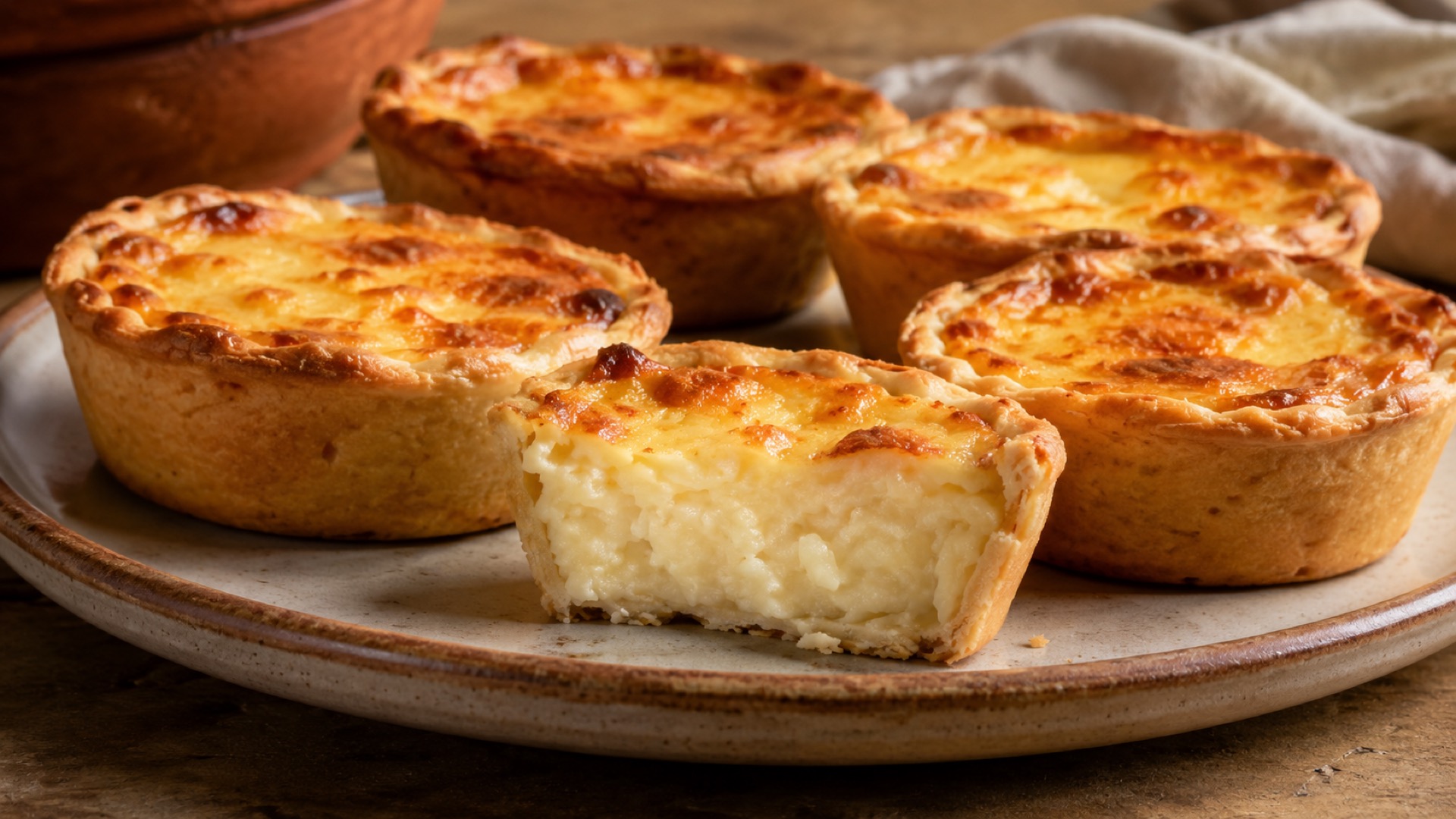
Small, individual, sold from every Florentine bakery window since the 1800s. The budino di riso is a rice pudding baked inside a shortcrust shell. Warm or room temperature, it is one of the most comforting things in the Tuscan pastry tradition.
METHOD
7 steps, and one will define the dish.
Into the cooled rice mixture.
Rub butter into flour and sugar, add egg, bring together. Rest 20 minutes.
Small tartlet tins, 8cm. Blind bake 10 minutes at 175°C.
Level and smooth.
Until golden on top and set.
Serve at room temperature.
WHY IT WORKS — THE SCIENCE
The rice must be overcooked on purpose.
Florence has a specific relationship with rice that the rest of Italy does not fully understand. In a country where risotto dominates the north and pasta dominates the south, Florence invented a dessert from rice — small, individual, sold warm from bar windows at breakfast, eaten in two bites with a coffee. The budino di riso is not ambitious. It does not need to be.
The filling is essentially rice pudding: short-grain rice cooked slowly in whole milk with sugar and vanilla until completely soft, then enriched with eggs and lemon zest and baked inside a shortcrust shell. The result is a dense, custardy interior in a crumbly pastry case that collapses pleasantly as you bite through it.
The rice must be overcooked
This is the instruction that confuses people who have never made budino di riso. The rice must be cooked past the point you would normally stop — 25 minutes in whole milk, stirring frequently, until it has absorbed almost all the liquid and has the consistency of a thick porridge. The individual grains should still be visible but offer no resistance. This overcooking is what gives the budino its characteristic dense texture.
“I have been making budino di riso since 1974. The recipe has not changed. The customers have not changed their request for it. There are things in Florentine cooking that have achieved their final form and require no further development.”— SANDRO GALLI, FORNO SANDRO, FLORENCE