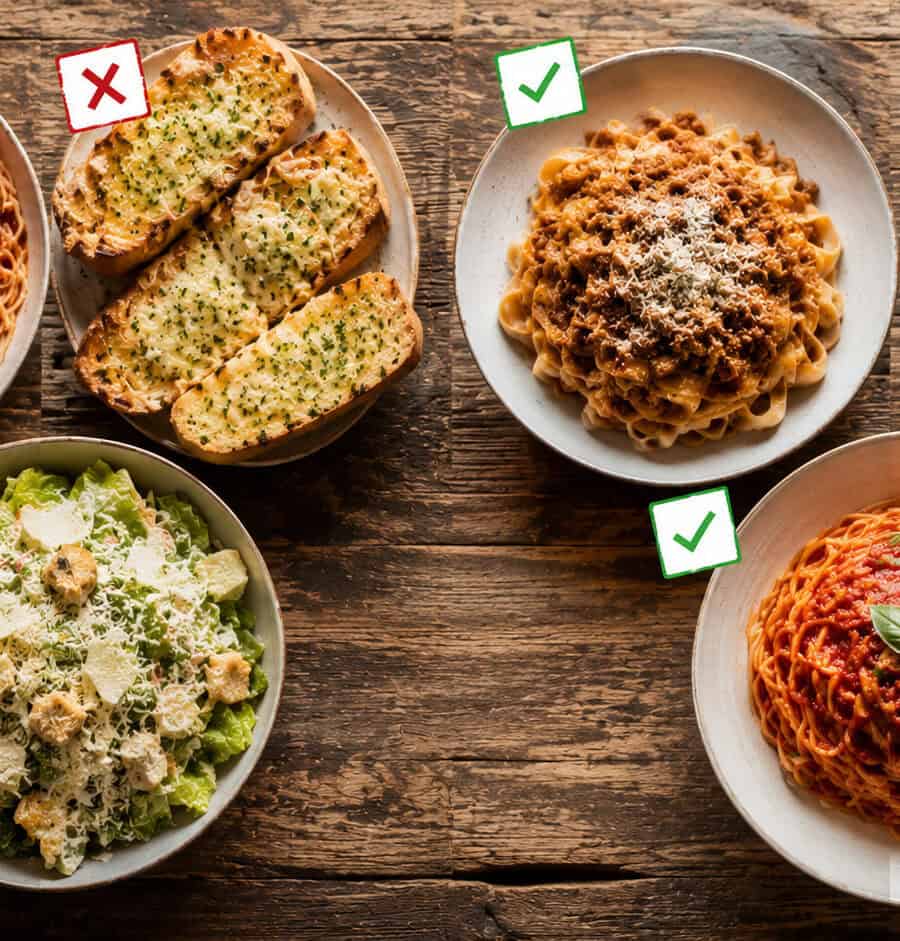
Caesar salad is not Italian. It was invented in Tijuana.
Caesar Cardini was Italian by birth, but he invented his salad in 1924 in his restaurant in Tijuana, Mexico. The salad is Mexican-American. The dressing contains Worcestershire sauce and raw egg. Neither is particularly Italian. The name has done enormous reputational damage.
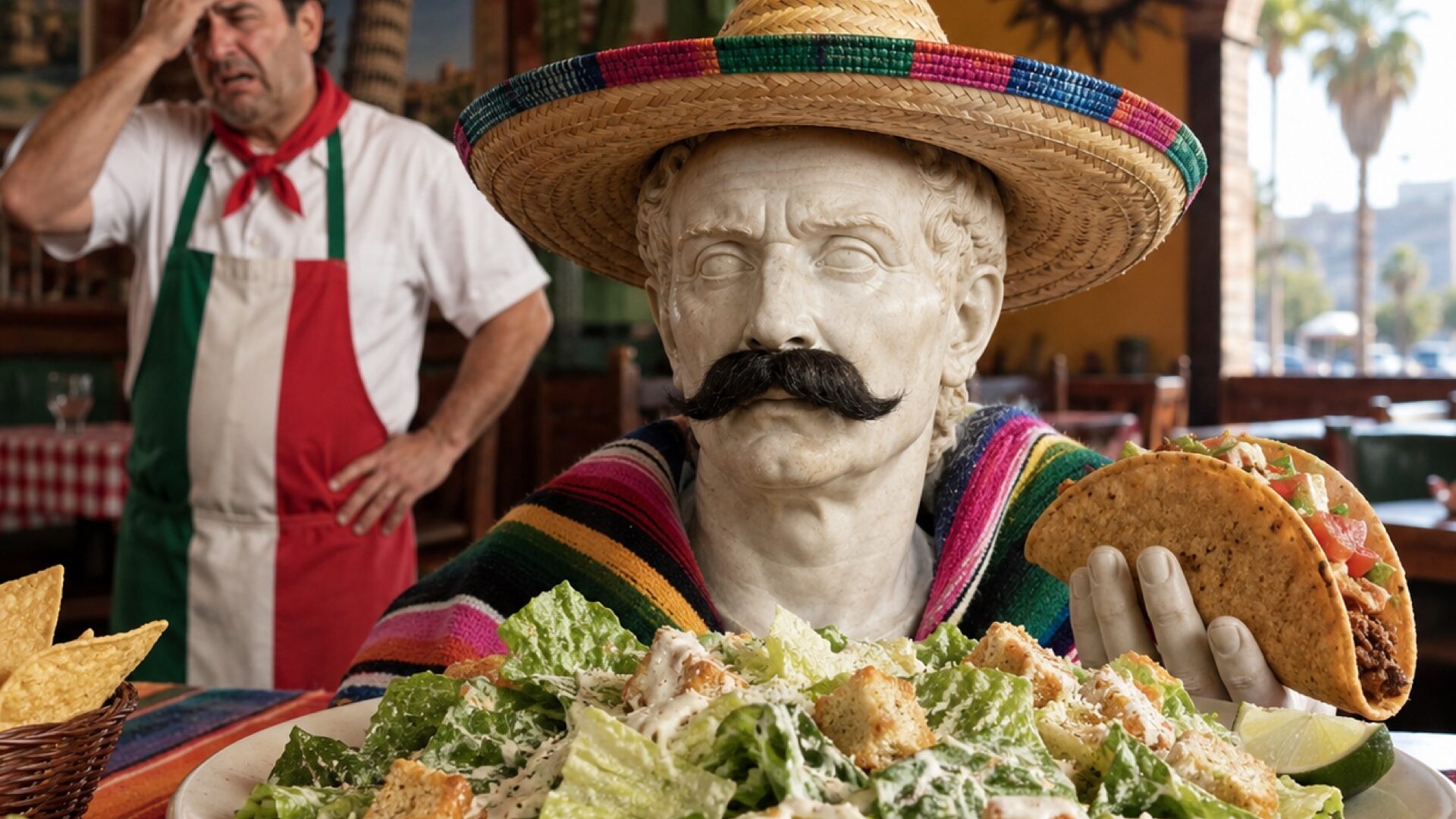
Caesar Cardini was born in Baveno, on Lake Maggiore, in 1896. He emigrated to the United States after World War One and eventually opened a restaurant in Tijuana, Mexico, just across the border from San Diego, to serve American customers who came south to escape Prohibition. In the summer of 1924, during a busy Fourth of July weekend when the kitchen was running low on supplies, he improvised a salad from what was available. He called it the Caesar Salad. It has nothing to do with Italy.
The dressing contains Worcestershire sauce (British), anchovies (Mediterranean), raw egg yolk (universal), lemon juice (universal), garlic (Italian in this context), olive oil (Italian in this context), and parmesan (Italian). The Italian elements are ingredients, not origin. The dish is Mexican-American.
Why this matters
It matters because Italian restaurants worldwide have been serving Caesar salad as though it belongs to their tradition, and customers have been ordering it assuming it is authentic Italian food. It is not. It is a remarkably good Mexican-American creation by an Italian immigrant, which is a more interesting origin story than “Italian salad” and also the true one.
“My grandfather would have been proud that his salad became so famous. He would have been confused that anyone thought it was Italian. He made it in Mexico, for Americans, to survive Prohibition. That is the story.”— ROSA CARDINI, DAUGHTER OF CAESAR CARDINI
What Italy actually has instead
Italy has excellent salads that are genuinely Italian: panzanella (Tuscan bread and tomato), insalata caprese (buffalo mozzarella, tomato, basil), insalata di rinforzo (Neapolitan Christmas salad), and the infinite variations of verdure condite — dressed greens with olive oil, salt, and lemon. None of them has croutons, anchovy dressing, or parmesan shaved on top. All of them belong to the country they come from.