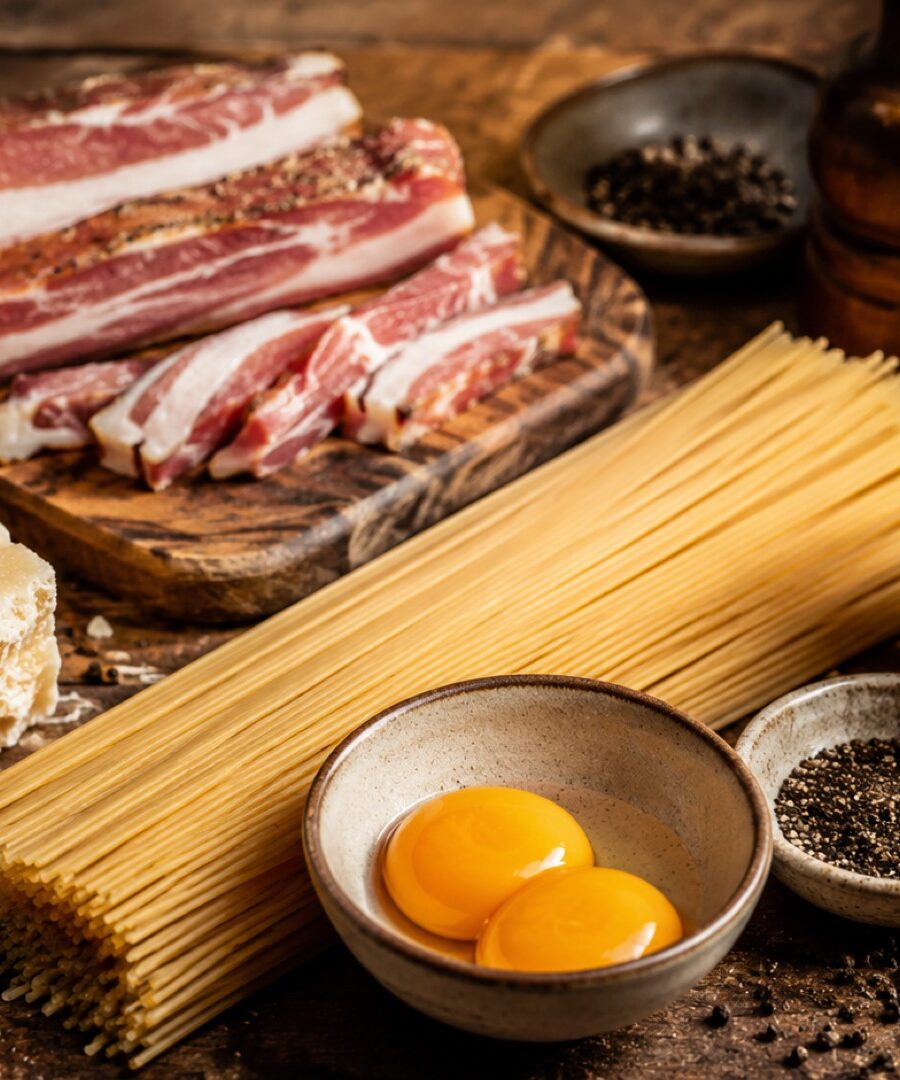
Pesto is never heated. Not even for a second.
Every English-language cookbook tells you to warm the pesto in a pan. In Liguria, this sentence causes physical pain. Basil oxidises in 40 seconds over direct heat — it turns dark, bitter, and flat.
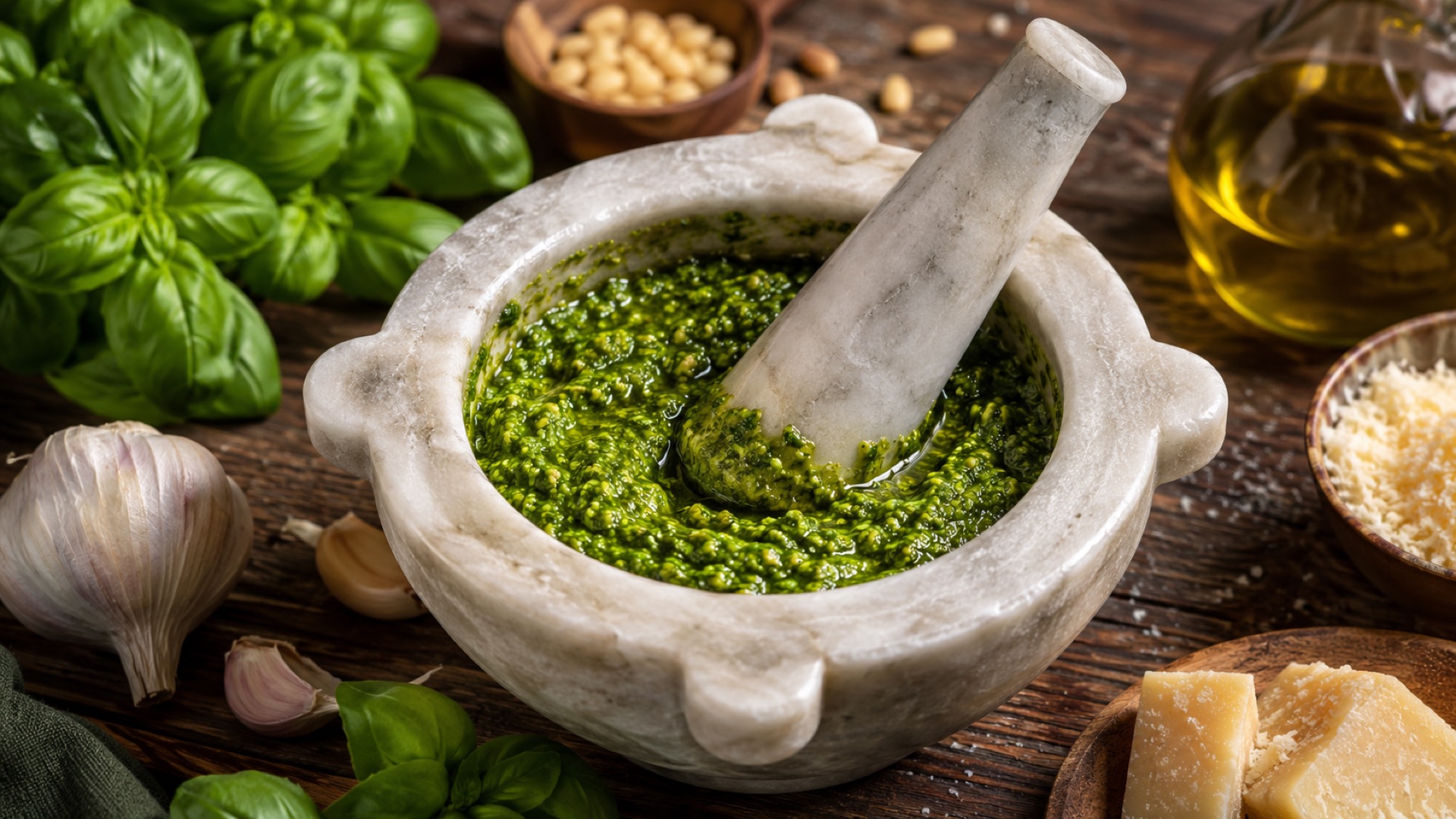
Pesto alla genovese is never heated. This is not a suggestion — it is a structural property of the dish. Basil oxidises when cooked in under a minute: it changes colour, turns bitter, loses the volatile aromatic oils that define it. Cooked pesto is a different substance.
And yet, in every English-language cookbook, you find the same instruction: “heat the pesto in a pan for 2 minutes over medium heat.” Every time this instruction is followed, someone in Genoa falls off their chair.
How to use pesto correctly
Add it to hot pasta, off the heat, with a spoonful of pasta water to loosen it. The residual heat of the pasta is enough to integrate the pesto without cooking it. If the pesto is cold from the fridge, bring it to room temperature first — at least 15 minutes before using it. Cold pesto hitting hot pasta creates a temperature shock that can make it look separated.
Is a mortar necessary?
Technically no — a good blender with cold blades produces an acceptable result. In practice, the mortar pounds the leaves rather than cutting them, which means the cells break slowly, releasing oils rather than exposing cell walls to oxidation from blade heat. The result is a greener, more stable pesto. If you use a blender, chill the bowl and blades first, and work in short pulses.
“Genovese DOP basil has smaller, more fragrant leaves, with less chlorophyll than supermarket varieties. Using large-leaf basil produces a darker, more herbaceous pesto. It’s not wrong — it’s a different thing.”— ROBERTO PANIZZA, WORLD PESTO CHAMPIONSHIP, GENOA
The municipality of Genoa’s official recipe
Genovese DOP basil, Italian pine nuts, Vessalico garlic, coarse salt, Parmigiano Reggiano aged 24 months, Sardinian pecorino, Ligurian extra virgin olive oil. Every substitution is technically permitted and produces a different result. The filed recipe exists to set a reference point, not to condemn anyone who uses 12-month Parmesan.