Prosciutto di Parma is not for cooking. It is for eating.
Prosciutto di Parma costs money, takes 24 months to produce, and contains flavour compounds that are destroyed by heat within 30 seconds. Cooking it is the culinary equivalent of burning a painting to stay warm. Use speck, use pancetta, use bacon — but not Parma ham.
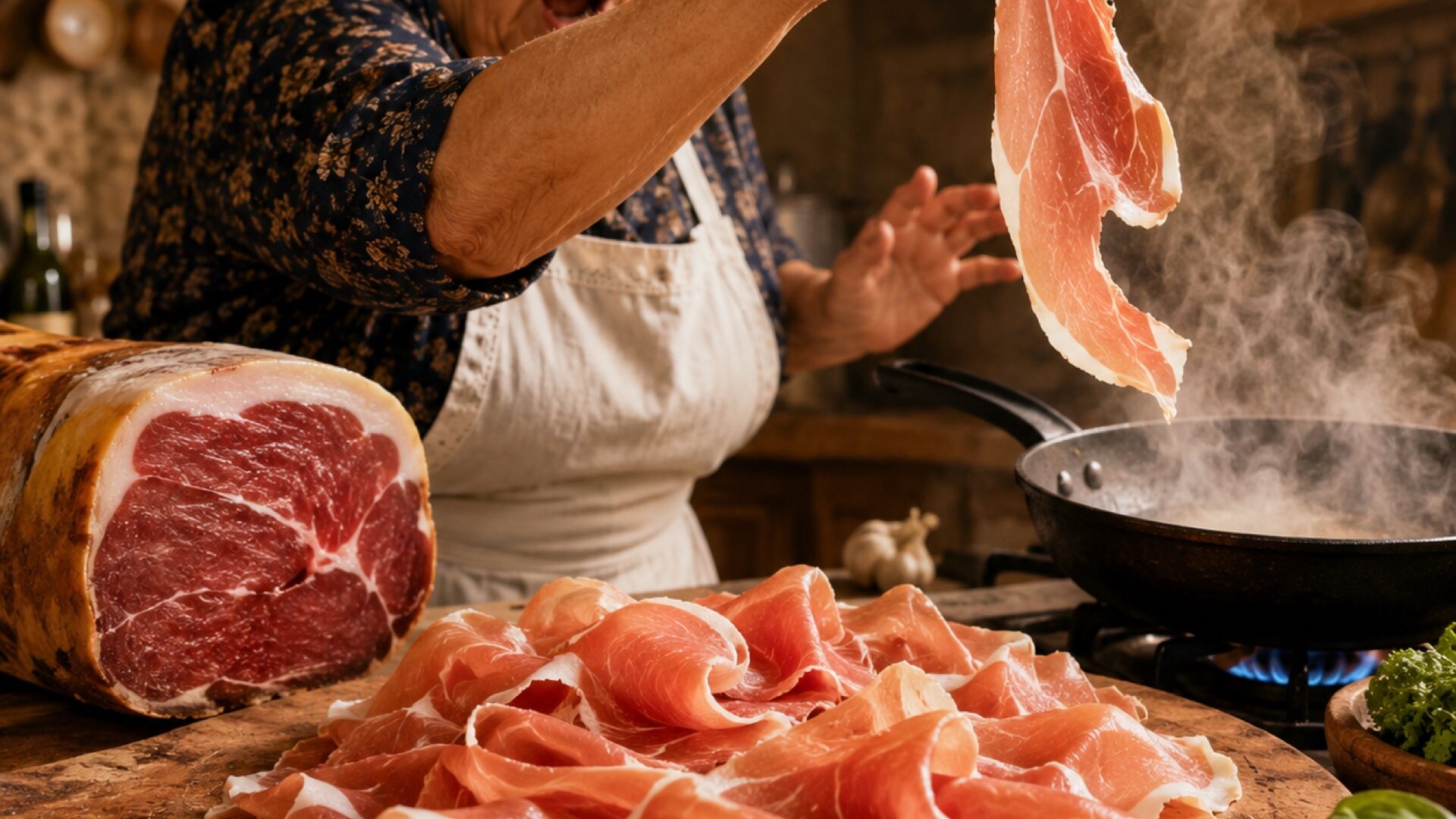
Prosciutto di Parma is aged for a minimum of 12 months. The premium versions — labelled riserva — are aged for 24 months or more. In those 24 months, enzymes break down the proteins and fats in the ham into hundreds of aromatic compounds that give the prosciutto its complex, sweet, nutty flavour. These compounds begin to evaporate and break down the moment they are exposed to temperatures above 50°C. In a frying pan, that process takes approximately 30 seconds.
What you are left with, after cooking Prosciutto di Parma, is a salty, slightly chewy piece of pink meat. It is not bad. It is simply not the thing you paid for. You have spent 24 months of patient ageing on a product and then destroyed the results in half a minute. There are cheaper ways to achieve the same outcome.
What to use instead
For cooking, the Italian cured meats designed to take heat are: pancetta (rolled or flat), speck (smoked and cured shoulder from Alto Adige), and guanciale (cured cheek, preferred for carbonara and amatriciana). All three are cheaper than prosciutto di Parma, all three are designed to render fat and develop flavour under heat, and none of them will make you feel guilty about what you are doing to them.
“Prosciutto di Parma is eaten. Not cooked. The distinction seems obvious. Apparently it is not.”— CONSORTIUM OF PROSCIUTTO DI PARMA
The exception
There is one preparation in which prosciutto touches heat: saltimbocca alla romana, where a thin slice of prosciutto is placed on a veal escalope and seared briefly. In this case the prosciutto is not the flavour agent — it is a crust. The cooking time is 60–90 seconds per side. The prosciutto crisps slightly and adds salt and texture. This is the one acceptable application and it is specifically Roman, specifically brief, and specifically not the same as throwing prosciutto into pasta sauce.