Overnight in a fine sieve. Discard the liquid.
DESSERTS · LAZIO
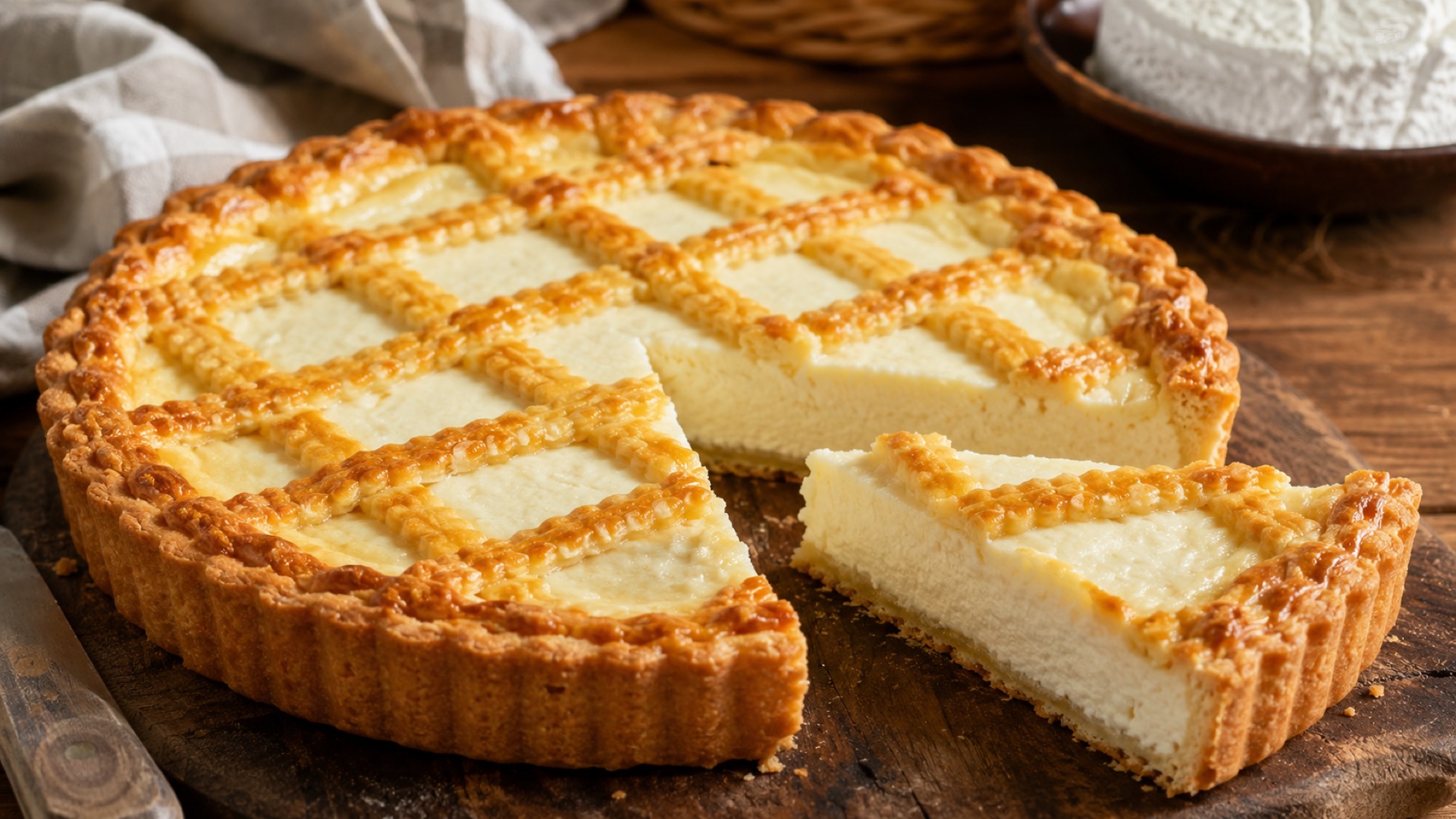
Crostata di ricotta: Rome’s version of cheesecake.
Shortcrust pastry, sheep's milk ricotta, egg, sugar, lemon, cinnamon. The Roman crostata di ricotta is lighter than a cheesecake, drier than a tart, and better than both. It is the dessert sold in every Roman pasticceria and made in every Roman home.
METHOD
7 steps, and one will define the dish.
Butter into flour and sugar. Add eggs and lemon zest. Rest 30 minutes.
Beat ricotta with sugar, eggs, cinnamon, vanilla until smooth.
With two-thirds of the pastry.
Level and smooth.
Strips of remaining pastry in a grid.
Until golden and just set. Cool completely before slicing.
WHY IT WORKS — THE SCIENCE
Drain the ricotta or the tart cracks.
The crostata di ricotta is Rome’s answer to cheesecake, and it is better than cheesecake in the specific ways that Roman cooking tends to be better: less sweet, less rich, less insistent about announcing its presence. The filling is ricotta beaten with eggs, sugar, cinnamon, and vanilla — drained overnight to remove all excess moisture — baked inside a shortcrust shell with a lattice on top.
It is sold in every Roman pasticceria, made in every Roman home, eaten at room temperature with coffee. It is not a celebration dessert. It is an everyday dessert, which in Rome means it must be perfect without appearing to try.
Why sheep’s milk ricotta
Sheep’s milk ricotta has more fat, more flavour, and — crucially — less water than cow’s milk ricotta. The lower moisture content means the filling sets more evenly during baking and does not crack as it cools. The flavour is more complex — slightly tangy, with a minerality that cow’s milk ricotta does not have. If you cannot find sheep’s milk ricotta, drain cow’s milk ricotta overnight in a fine sieve and discard the liquid. The result will be closer to correct.
“The Romans have been making crostata di ricotta for at least five hundred years. The recipe has not changed in any meaningful way. This is either a sign of tradition or of perfection. Probably both.”— GIULIO TERRINONI, PER ME, ROME
Cinnamon, not vanilla
The Roman crostata di ricotta uses cinnamon as its primary flavouring. Not a trace of cinnamon — a full teaspoon, present enough to be noticed. This distinguishes it from the Neapolitan version, which uses orange blossom water, and from the generic ricotta cheesecakes of the rest of the world. If you taste a ricotta tart and cannot identify the cinnamon, either the cinnamon is old or there was not enough of it. Both are correctable.