Bruschetta has no avocado. Also: it’s not pronounced the way you think.
Bruschetta is toasted bread, olive oil, garlic, salt. In its summer version, ripe tomatoes. It is not a vehicle for avocado, smoked salmon, or anything that arrived in Italian cuisine after 1992. Also: the ch in Italian is a hard k sound. Brus-KET-ta.
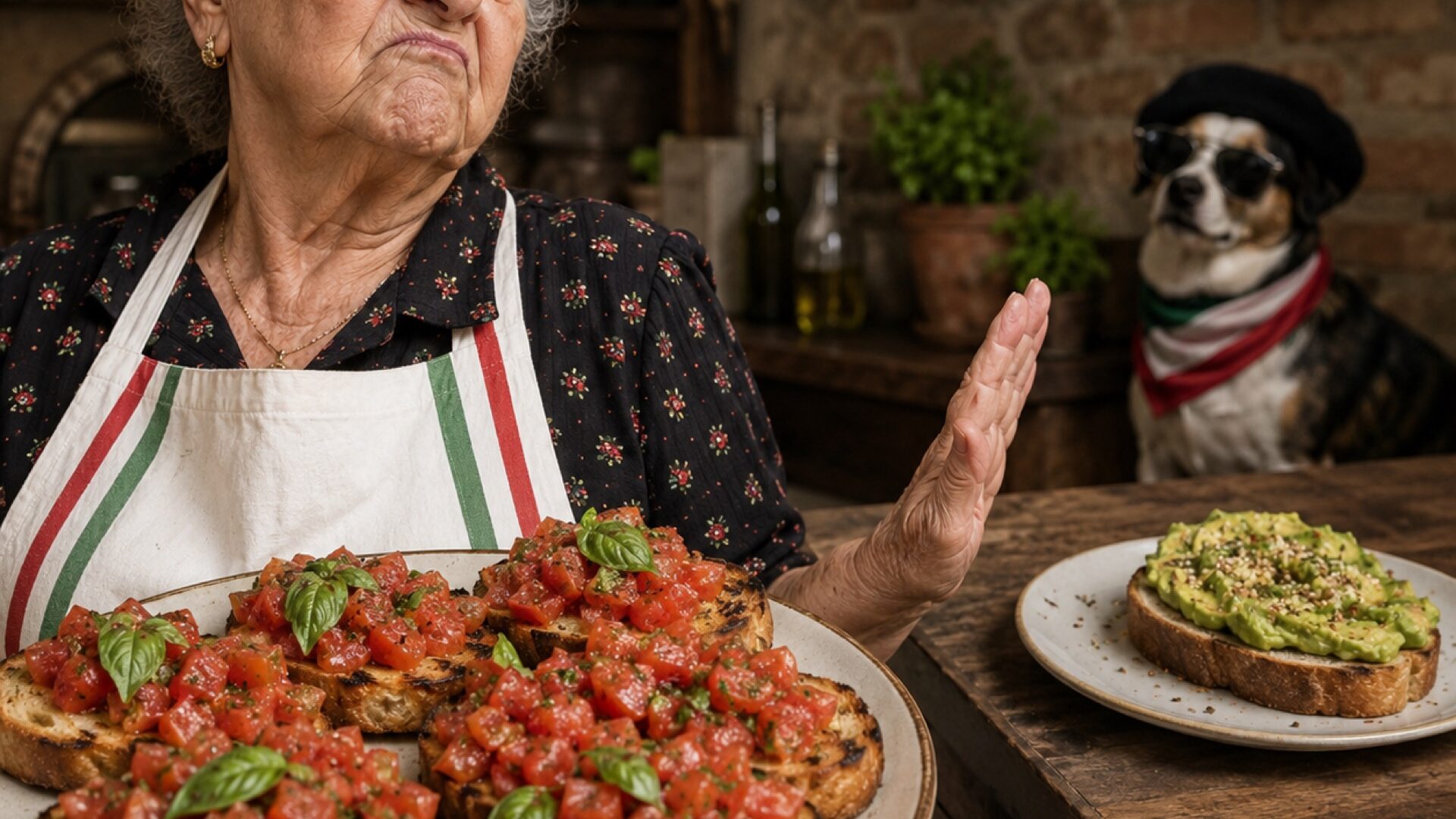
Bruschetta — pronounced brus-KET-ta, with a hard k, because in Italian the ch combination always makes that sound — is bread that has been grilled or toasted over a flame, rubbed with raw garlic, and drizzled with olive oil. Salt. That is the original bruschetta. The tomato version is a summer addition. The avocado version is not a version; it is a different food placed on bread and named incorrectly.
The word comes from the Roman dialect verb bruscare, meaning to toast or char. It describes the bread, not the topping. Bruschetta is an ancient preparation — a way to improve stale bread, to use new-harvest olive oil, to make something good from almost nothing. Its virtue is simplicity. Every ingredient added beyond garlic and oil is a complication the dish did not ask for.
The pronunciation matters
This is not pedantry. Italian is a phonetically consistent language — every letter is pronounced, and the ch combination always produces a hard k sound. Bruschetta, gnocchi, chianti, zucchini. They all follow the same rule. Saying “broo-SHET-ta” in an Italian restaurant is the acoustic equivalent of ordering “spaghetti bolognaise.” Technically understood, but noticed.
“We had a sign outside for two years that said ‘brus-KET-ta — not broo-SHET-ta.’ People still said it wrong. We took the sign down. Some battles are not worth fighting.”— ROMA SPARITA, ROME
The tomato version
Bruschetta al pomodoro — ripe summer tomatoes, olive oil, basil, salt, on toasted garlic bread — is correct, seasonal, and excellent. The tomatoes must be ripe, which means it is a summer preparation. Making it in January with pale supermarket tomatoes produces a dish that is technically bruschetta and practically disappointing. The season is part of the recipe.