Bolognese does not go on spaghetti. It never has.
The municipality of Bologna filed the official ragù recipe in 1982. It specifies tagliatelle. Not spaghetti. Not penne. Not any pasta that is not tagliatelle. This is not a preference — it is a registered document.
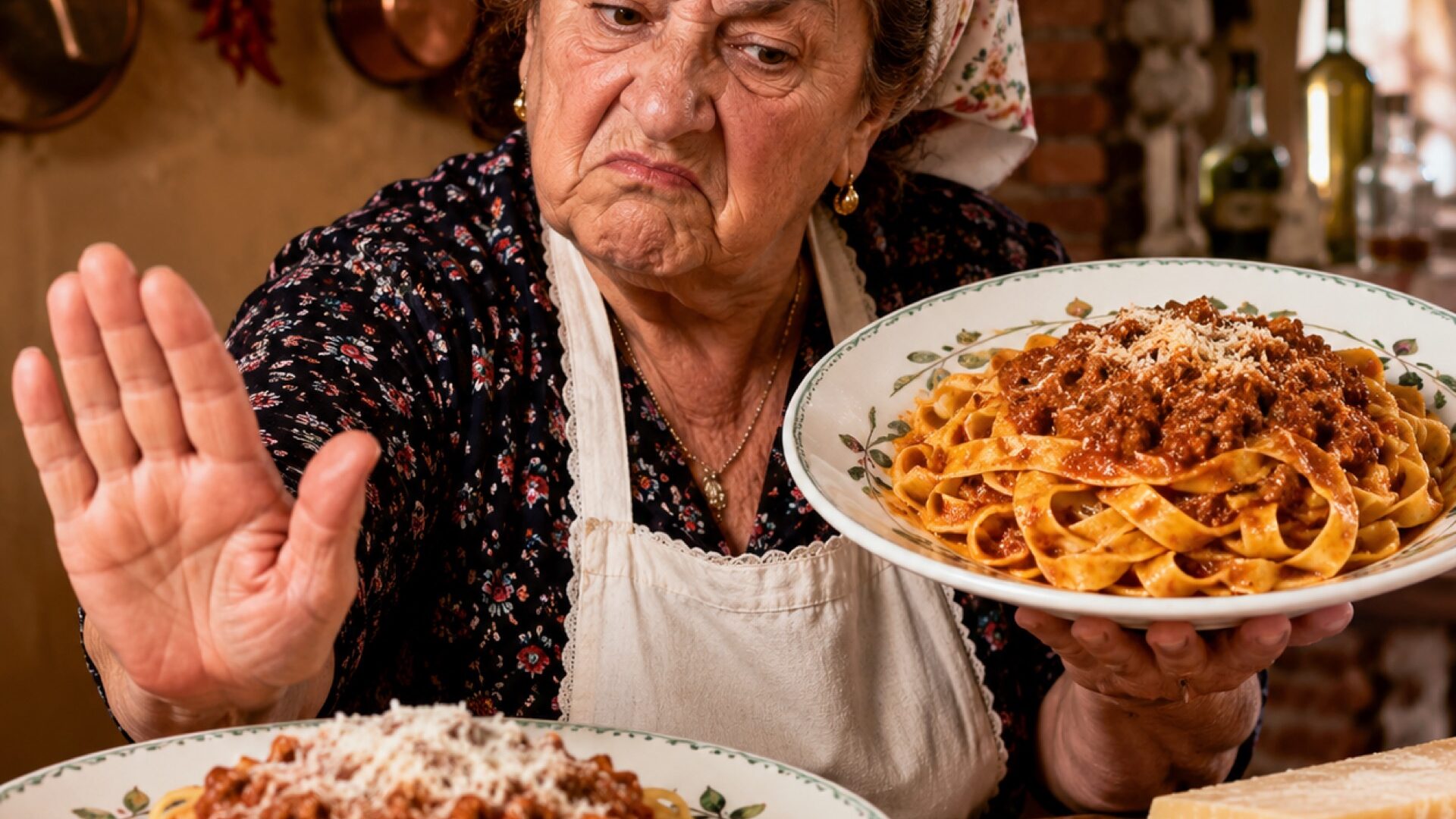
In 1982, the Italian Academy of Cuisine deposited the official recipe for ragù alla bolognese with the Bologna Chamber of Commerce. The document specifies beef, pork belly, onion, carrot, celery, tomato paste, dry white wine, whole milk, and tagliatelle. Spaghetti is not mentioned. It has never been mentioned. This is not an accident.
The ragù alla bolognese served on spaghetti in restaurants worldwide is a dish that exists entirely outside Italy. In Bologna it is considered an error significant enough to have been formally documented. The Chamber of Commerce registration is, among other things, a public record of exasperation.
Why tagliatelle and not spaghetti
The answer is textural. Ragù is a dense, slow-cooked meat sauce with very little liquid. Spaghetti is a smooth, round pasta that sauce slides off. Tagliatelle is flat, rough-edged, and porous — it holds the ragù in its layers rather than letting it pool at the bottom of the bowl. The pairing is not arbitrary: the pasta shape was chosen specifically to work with this sauce and no other.
The second-most-appropriate pasta is rigatoni — the ridges and the hollow tube catch the meat. Pappardelle works for the same reason as tagliatelle. Everything else is a compromise.
“Spaghetti bolognese is the dish that makes Italians feel most misunderstood. It is not a variation — it is a fundamental misreading of what the sauce is and how pasta works.”— AURORA MAZZINI, OSTERIA DELL’ORSA, BOLOGNA
The milk question
The registered recipe includes whole milk added in the final stage of cooking. Most non-Italian versions omit this. The milk does two things: it tenderises the meat by breaking down the proteins slightly, and it rounds the acidity of the tomato. The result is a sauce that is richer and less sharp than the milk-free version. If you have been making bolognese without milk, you have been making a different dish.