The rotary grater: because parmigiano deserves better than a box grater.
The box grater produces a pile of cheese. The rotary grater produces a cloud of cheese. The difference is not aesthetic — it is functional. A cloud of parmigiano melts into pasta in seconds. A pile of parmigiano sits on top and does nothing until you stir it, by which point it is already too late.
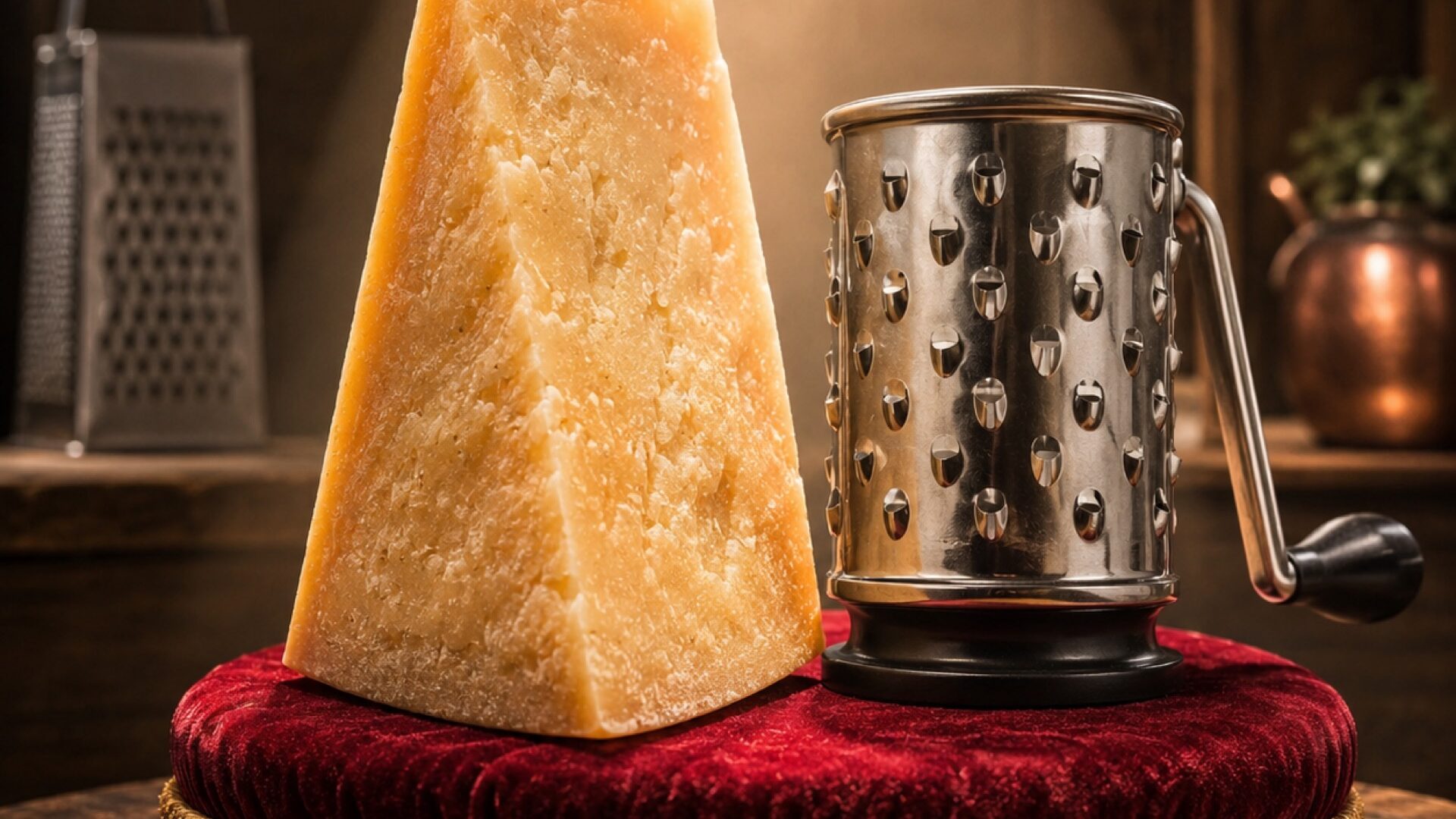
The rotary grater — grattugia a tamburo — is a cylinder of fine perforated steel that you crank by hand, producing a continuous ribbon of finely grated cheese that falls in a loose, airy pile. This pile behaves differently from the pile produced by a box grater. Specifically, it melts.
The surface area of freshly rotary-grated parmigiano is significantly larger than the same weight of box-grated parmigiano. This increased surface area means more contact with the hot pasta, faster and more even melting, and a sauce that incorporates the cheese rather than sitting beneath a layer of it. This is not a marginal difference. It is the difference between pasta al burro e parmigiano that tastes correct and the same dish made with box-grated cheese that produces a slightly cheesy pasta.
The pre-grated sachet question
Pre-grated parmigiano in a sachet contains cellulose — powdered wood pulp — as an anti-caking agent. The cellulose prevents the cheese from melting correctly. The cheese in those sachets is also, invariably, grated weeks or months before you use it, which means the volatile aromatic compounds — the ones that make parmigiano smell and taste like parmigiano — have largely evaporated. You are essentially paying for wood-scented dairy powder. Buy a block. Grate it yourself. Preferably with a rotary grater.
“Parmigiano is aged for 24 months to develop its flavour. Pre-grating it and sealing it in a plastic bag then destroys most of that flavour within two weeks. This seems counterproductive.”— CONSORTIUM OF PARMIGIANO REGGIANO