The mortar and pestle is not a decorative object. Use it.
It sits on your counter looking rustic. Occasionally someone puts keys in it. Its actual purpose — the one it has served in Italian kitchens for four thousand years — is to crush, grind, and emulsify in ways that no blade can replicate. Get it off the shelf.
Let us describe the average fate of the mortar and pestle in a modern kitchen. It arrives as a gift, usually from someone who has been to a market in Tuscany. It is placed on the counter because it looks good. Garlic cloves are occasionally crushed in it when someone cannot find the garlic press. Keys end up in it. One day a decorative lemon is placed in it for a photograph. The pestle is lost within eight months.
This is a tragedy with a simple solution, which is to use it for what it was designed to do: crush, grind, and emulsify ingredients in ways that blades and processors cannot replicate.
The physics of pounding
When you crush garlic with a knife blade, you cut the cells and release the compounds quickly. When you pound garlic in a mortar, you rupture the cells more slowly, releasing the same compounds at a different rate and in a different form — producing a paste that is less sharp, more integrated, and more complex. The same principle applies to spices: grinding in a mortar releases aromatic oils that a coffee grinder, despite producing a finer powder, cannot match because the heat of the blade destroys them.
“The mortar is four thousand years old. The food processor is fifty. One of them has earned our trust.”— PATIENCE GRAY, HONEY FROM A WEED
What to use it for
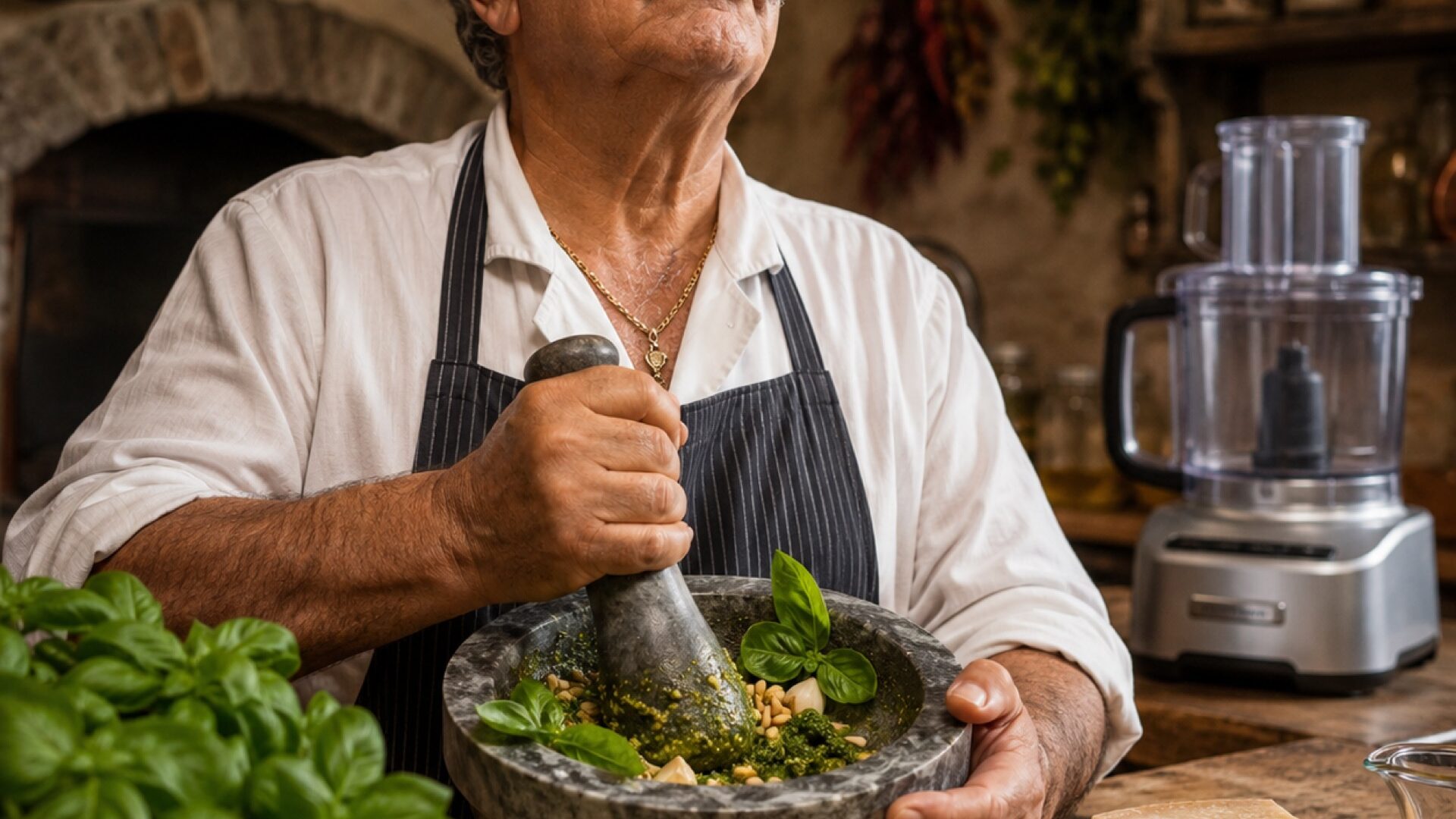
Pesto — where the mortar is not traditional but mandatory if you want the correct texture. Garlic paste for bruschetta. Spice mixes. Toasted pine nuts for fish dishes. Dried chilli and salt for a finishing condiment. Anything that involves making a rough paste from a hard ingredient. The food processor makes this faster. The mortar makes it better. You decide what matters to you.