A kitchen scale: the only tool that is correct every time.
Italian recipes that say "a pinch" were written by people who have made that dish four hundred times and whose hands have been calibrated by decades of repetition. Your hands have not. Use a scale. It costs twelve euros. It is the most reliable piece of equipment in your kitchen.
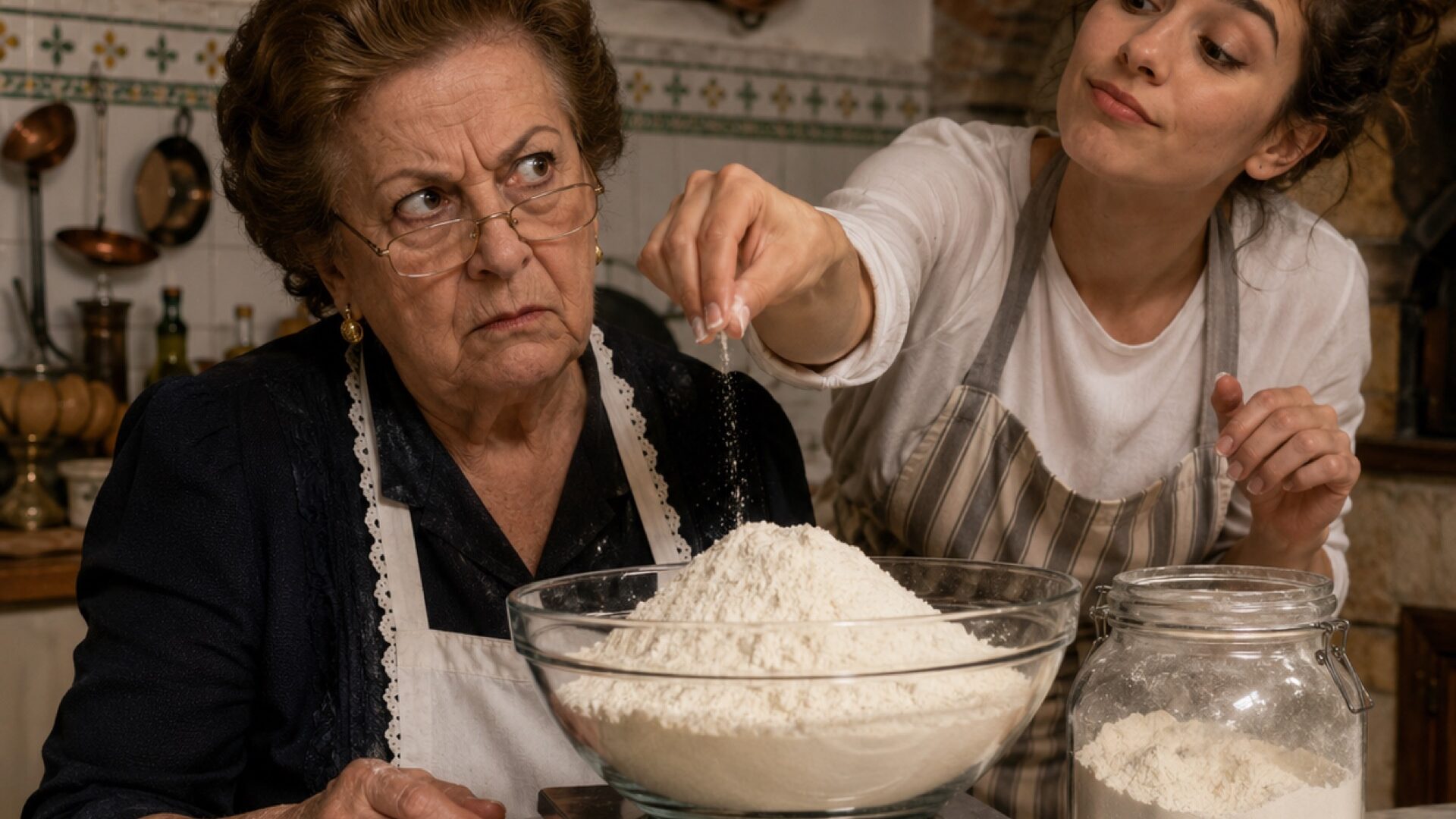
Italian recipes that instruct you to add “a pinch of salt” or “flour as needed” or “oil to taste” were written by people who have made that recipe several hundred times. Their hands are calibrated instruments developed over decades of repetition. They know what 8 grams of salt looks like in their palm. They know what 300 grams of flour looks like in a bowl. You, statistically, do not. Use a scale.
This is not an insult. It is a practical observation that applies to almost everyone who has not been cooking the same dishes in the same kitchen with the same ingredients for twenty years. A digital kitchen scale costs twelve euros, weighs 300 grams, fits in a drawer, and is the most reliable piece of equipment in your kitchen. More reliable than your oven thermometer (which is almost certainly wrong), more reliable than your timers (which you ignore), and infinitely more reliable than your intuition (which has produced several notable disasters).
Baking specifically
For pasta and simple sauces, approximations work. For baking — pastry, bread, pasta fresca — they do not. The ratio of flour to fat to liquid to leavening in a pastry recipe is a structural equation. Changing any variable changes the outcome. “A cup of flour” is not a unit of measurement — it is a volume that varies by up to 30% depending on how the flour was scooped, how it was stored, and what humidity is doing to it on that particular day. Grams are grams. Always.
“I taught cooking for forty years. The single most consistent predictor of whether a student’s pastry would succeed was whether they used a scale. It was not skill, not experience, not talent. It was the scale.”— ANNA DEL CONTE, GASTRONOMY OF ITALY
What to buy
Any digital scale that measures in 1-gram increments up to at least 5kg. The brand does not matter. What matters is that it measures in grams, not ounces, has a tare function (to subtract the weight of the bowl), and is kept within reach of wherever you cook. A scale that lives in a cupboard will not be used. A scale that lives on the counter will become the most-used tool in your kitchen within a month.