In cold water for 5 minutes until soft and pliable.
DESSERTS · PIEDMONT
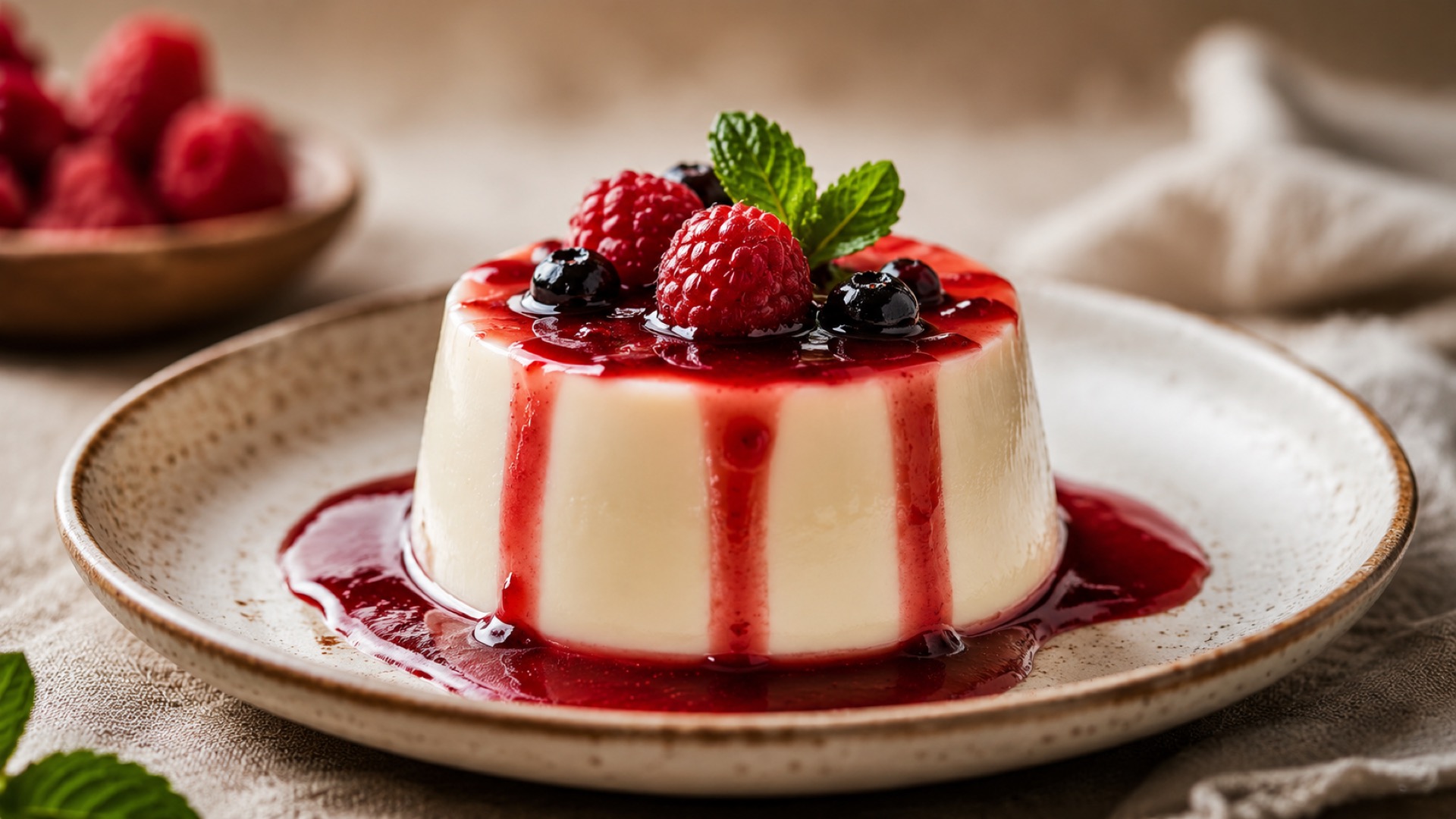
Panna cotta: three ingredients, one impossible-to-miss texture.
Cream, sugar, gelatine. Panna cotta is the most honest dessert in Italian cooking — it hides nothing, it lies about nothing.
METHOD
5 steps, and one will define the dish.
With sugar and vanilla pod seeds. Bring to a gentle simmer — not a boil. Remove from heat.
Squeeze out the sheets, add to hot cream, stir until completely dissolved.
Into lightly oiled moulds. Cool to room temperature, then refrigerate at least 4 hours.
Run a thin knife around the edge. Invert onto a cold plate.
WHY IT WORKS — THE SCIENCE
Gelatine is dosage, not magic.
Panna cotta doesn’t have a precise date of birth. It comes from Piedmont, probably from the tradition of high-end banquet cooking where spoonable desserts were a speciality. The recipe has three ingredients — cream, sugar, gelatine — and nowhere to go wrong without it showing.
The beauty of panna cotta is that its difficulty is invisible until you cut it. The perfect texture is the one that trembles when you move the plate but doesn’t pour. Too much gelatine and you get something that bounces. Too little and it won’t unmould cleanly.
The gelatine: exact dosage
For 500ml of cream, 8 grams of gelatine leaves (4 sheets of 2g each) produces a panna cotta that unmoulds cleanly and trembles visibly. If you use powdered gelatine, the dosage is identical in grams but the texture is slightly firmer — prefer leaves when you can find them.
Flavouring
Vanilla is the base and the classic. The whole pod steeped in warm cream releases both seeds and the oils of the pod itself. Alternatives that work: lemon zest, orange blossom water, or finely ground coffee steeped and strained through the warm cream. The error is overloading — panna cotta is a dessert of subtraction, not addition. One clear flavour, nothing competing with it.
The unmoulding
Run a thin, wet knife around the inside edge of the mould. Place a cold plate on top, invert, and hold both firmly. Give it one sharp downward shake. If it doesn’t release, run the knife around again — don’t try to force it. A panna cotta that has set properly will unmould cleanly. One that hasn’t will collapse regardless of what you do.
If you like desserts that are mostly patience, tiramisù is the same philosophy with coffee, and semifreddo al torroncino gets you frozen elegance with no machine at all.
SUBSTITUTIONS — IF YOU MUST
- GELATINE LEAVES
- US kitchens: powdered gelatin works identically — 2½ teaspoons, bloomed in 3 tablespoons of cold water, dissolved into the hot cream.
- HEAVY CREAM 35%
- American heavy whipping cream (36%) is exactly right. Anything labelled 'light' will not set into anything you want to eat.
- VANILLA POD
- A teaspoon of real vanilla extract, added off the heat. This dessert has three ingredients and nowhere to hide — no artificial extract.
STORAGE & REHEATING
- FRIDGE
- In their moulds, covered: 3 days with no loss of dignity. Unmould only when serving.
- FREEZER
- No. Gelatine weeps when thawed and the silk texture is gone for good.
REAL QUESTIONS
Asked, answered.
My panna cotta didn't set. What happened?
Either the gelatine was under-dosed or the cream boiled after it went in. Gelatine dissolves at a simmer and dies at a boil — heat the cream, then take it off before the gelatine.
It bounces like a rubber ball. Too much gelatine?
Yes. 8 grams per 500 ml is the ceiling, not the floor. Proper panna cotta barely holds its shape — the tremble is the proof.
How do I get it out of the mould in one piece?
Thin knife around the edge, three seconds of the mould's base in hot water, invert onto a cold plate with one decisive shake. Hesitation is how it tears.
Can I make it dairy-free?
Coconut cream sets well with the same gelatine dose. It's good. It's also a coconut dessert, not panna cotta.
Agar instead of gelatine?
It sets — firmer, less silky, and vegetarian. About 1 g agar per 250 ml, fully simmered. Expect a different texture and don't blame the recipe.