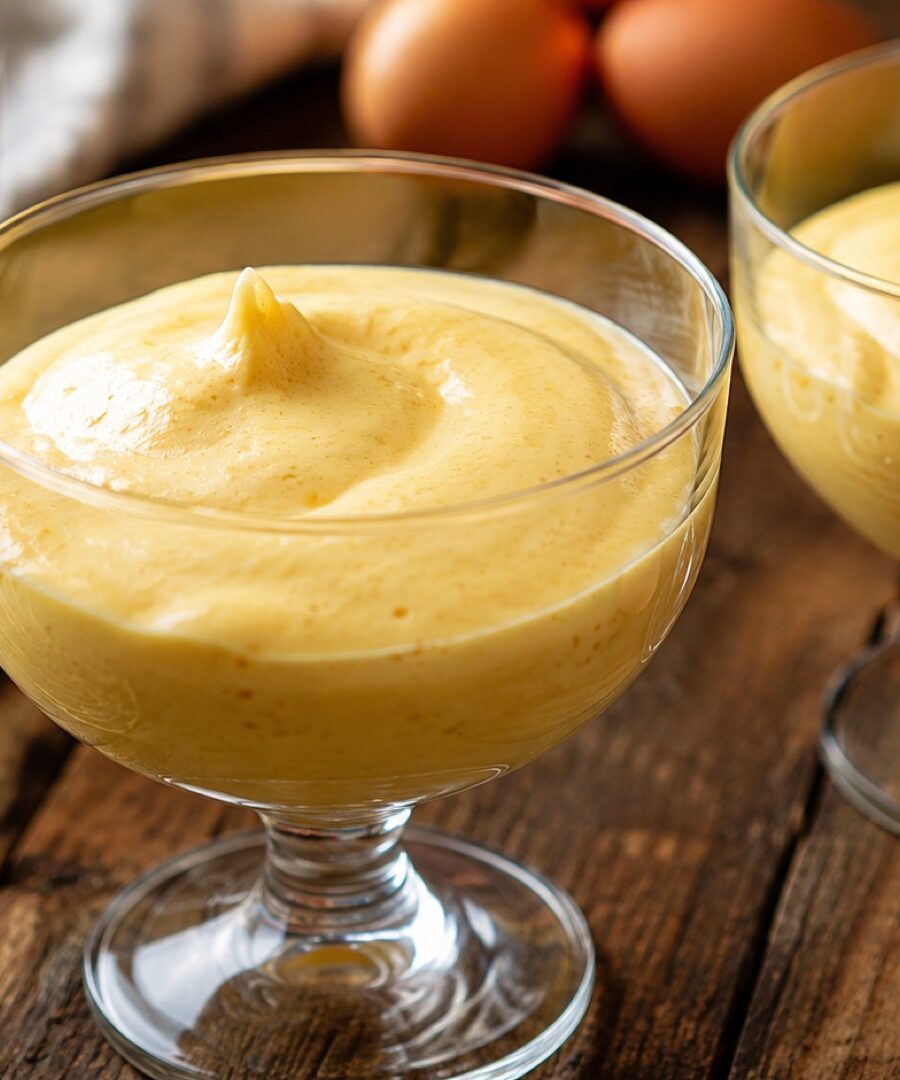
Whisk yolks and sugar in a double-boiler until pale and thick, about 6 minutes. Don't let it cook — you want 65–70°C.
DESSERTS · VENETO
Tiramisù has zero ingredients you can’t pronounce.
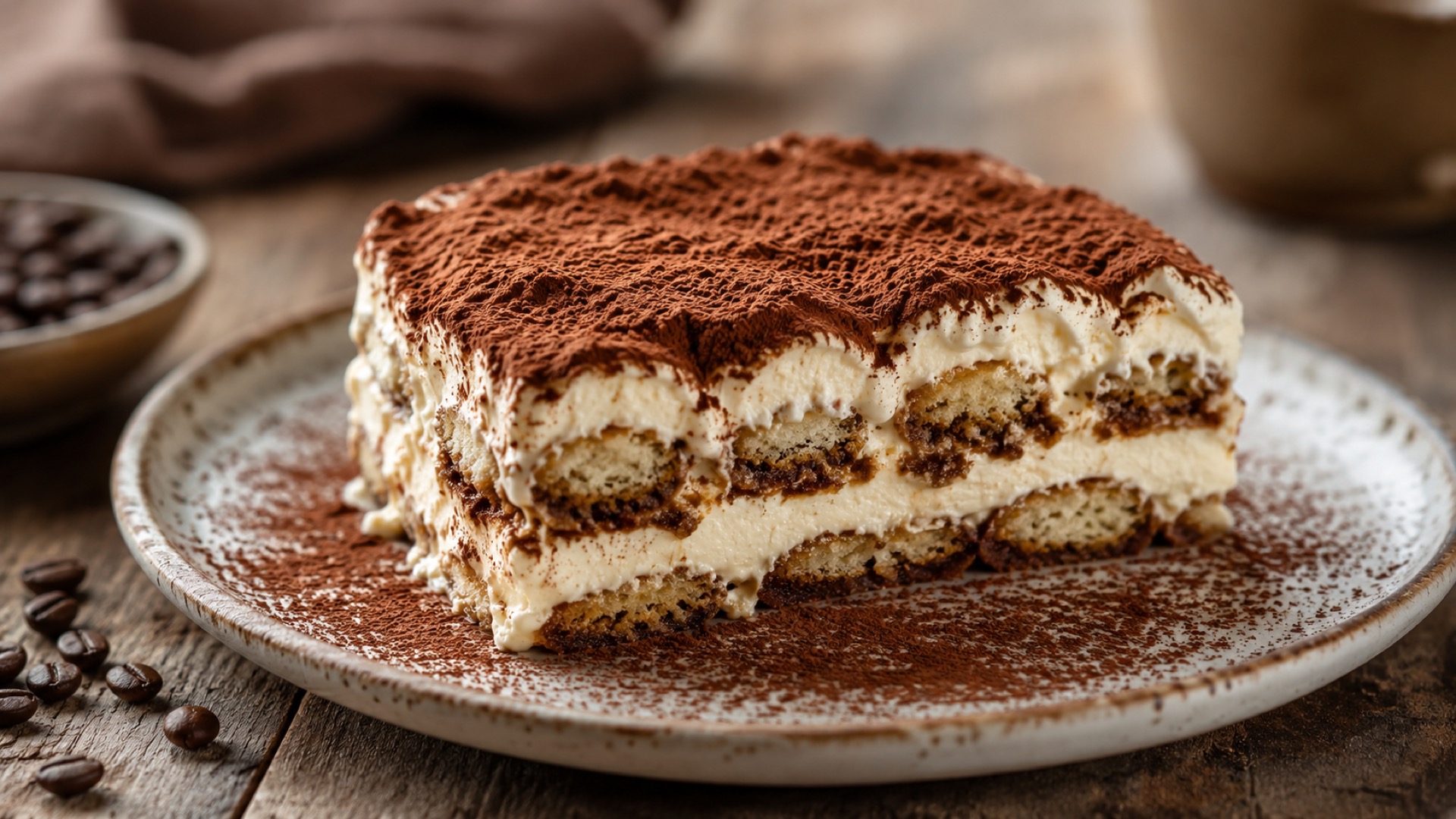
Mascarpone, eggs, sugar, espresso, savoiardi, cocoa. Tiramisù is not difficult — it is demanding about ingredient quality and cold temperature.
METHOD
6 steps, and one will define the dish.
Cold, gently, with a spatula. No electric whisk — it will deflate.
In room-temperature espresso. One second per side. They must absorb but not collapse.
Savoiardi, cream, repeat. Two layers. Level the top.
Covered with cling film. A full night is ideal.
Never in advance — it absorbs moisture and turns muddy.
WHY IT WORKS — THE SCIENCE
The zabaione is the secret nobody tells you.
Tiramisù was invented in the 1970s in Treviso, most likely at the restaurant Le Beccherie. It took thirty years to become the most famous Italian dessert in the world. In the meantime, someone started adding rum, then Kahlúa, then industrial mascarpone, then whipped cream. None of it is necessary.
The original tiramisù is a zabaione folded into mascarpone, with savoiardi barely dipped in espresso. The structure depends entirely on the quality of the zabaione — if it is thick and stable, the dessert holds. If it is watery, it collapses.
The zabaione: the step that makes the difference
Whipping yolks and sugar over a double boiler is not optional — it is the load-bearing structure of the dessert. The temperature must stay around 65–70°C to pasteurise the eggs without cooking them. If the double boiler is too hot, you get scrambled eggs. If it’s too cool, you haven’t pasteurised anything and the dessert won’t stabilise.
“Tiramisù needs temperature. The cold consolidates it, the heat destroys it. This is not philosophy — it’s chemistry.”— ADA BONI, IL TALISMANO DELLA FELICITÀ
The savoiardi: a matter of seconds
The biscuit must absorb the espresso quickly without becoming wet paste. One second per side is the right time. It must remain partially dry at the centre — during the six hours in the fridge it will absorb further moisture from the cream. Over-soaked savoiardi create a layer of wet bread at the bottom of the dish, not a dessert.
Why overnight is better than six hours
In six hours, the cream is set but still slightly unstable — you can feel it move when you plate it. After a night in the fridge, the mascarpone and zabaione have fully bonded, the savoiardi have found their final texture, and the flavours have married. The dessert is structurally complete. It is also significantly better.
The zabaione at the heart of this recipe is a dessert in its own right — Italy’s oldest, and still misunderstood. And if you want the same make-ahead elegance with three ingredients instead of six, that’s panna cotta.
SUBSTITUTIONS — IF YOU MUST
- MASCARPONE
- Sold in 8-oz tubs at most US supermarkets (BelGioioso is solid) — you need just over two. Cream cheese is not a substitute; it's a different dessert with an identity crisis.
- SAVOIARDI
- Crisp Italian ladyfingers — the dry, snappable kind. Soft sponge ladyfingers collapse on contact with espresso.
- ESPRESSO
- Strong moka coffee works. Drip coffee is too thin — the savoiardi drink it and taste of nothing.
- MARSALA OR RUM
- Traditional, optional. Skip the liqueur entirely before you substitute something odd.
STORAGE & REHEATING
- FRIDGE
- Covered, 3 days — and it peaks at 24 hours, when the layers have settled into each other.
- FREEZER
- Yes, actually: up to 2 weeks, well wrapped. Thaw overnight in the fridge. It comes back slightly firmer; some people prefer it.
- COCOA
- Dust just before serving, never before storing — it absorbs moisture and turns to mud.
REAL QUESTIONS
Asked, answered.
Can I make it without raw eggs?
Yes — bring the yolks to 82°C / 180°F with the sugar in a double boiler, then whip. Pasteurized zabaione, same dessert.
Why did my cream turn soupy?
Either the mascarpone was warm, or it was overworked. Cold mascarpone, folded by hand, and stop at 'combined'.
How long do the savoiardi stay in the espresso?
One second per side. Count it. They keep absorbing for hours in the fridge — what feels too dry at assembly is perfect at serving.
Can I serve it the same day I make it?
Six hours in the fridge is the minimum for the layers to become one thing. Same-day tiramisù is a trifle in a hurry.
Whipped cream in the mascarpone — yes or no?
The classic is eggs and mascarpone only. Folded whipped cream is a common, lighter variant — fine, but know you've left the original.