Batons in a cold pan. Medium-low heat, 8 minutes, until golden and crisp. Set the guanciale aside. Leave the fat in the pan.
PASTA · LAZIO
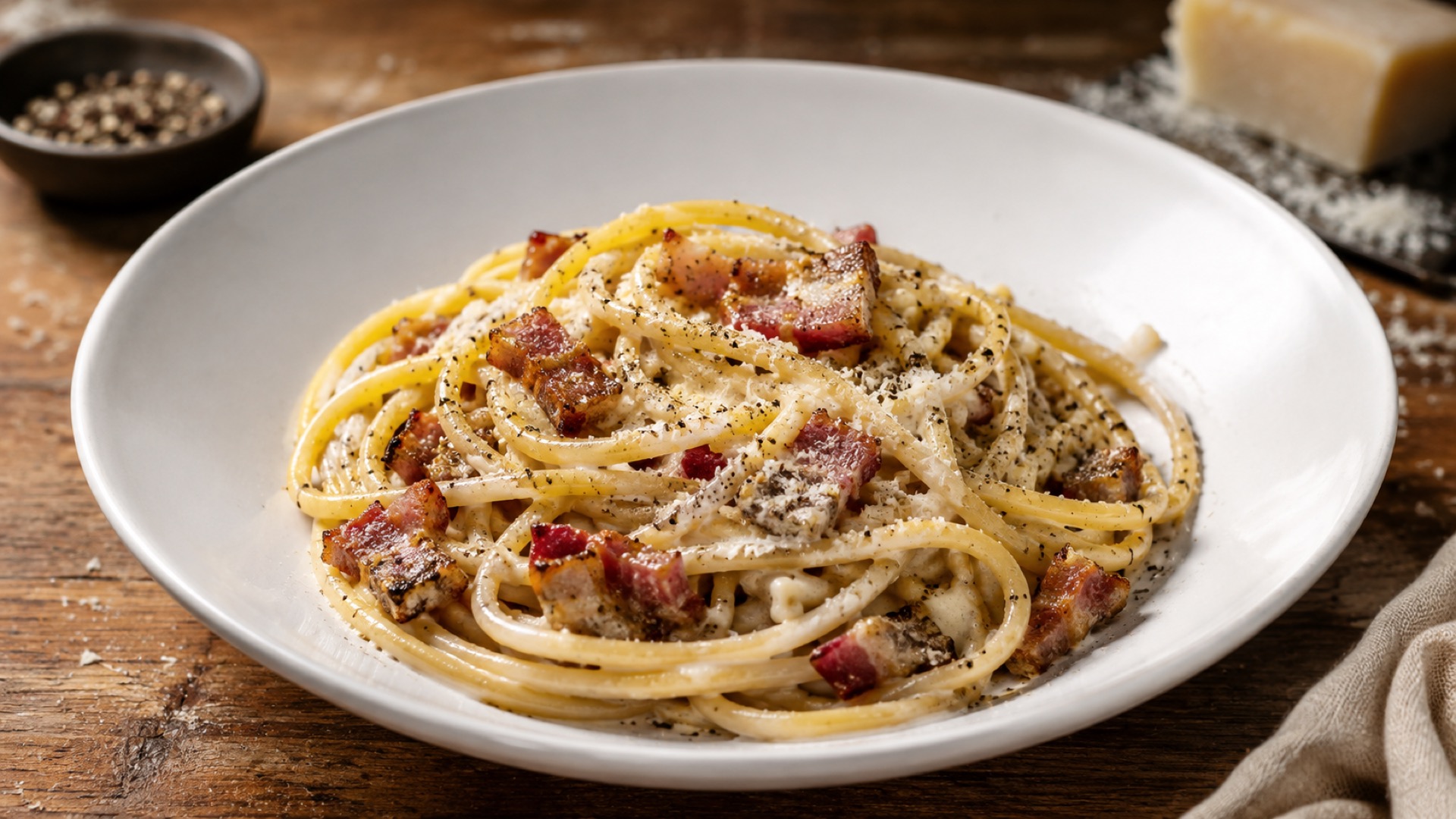
Pasta alla gricia: the carbonara that existed before eggs.
Guanciale, pecorino, pepper, pasta water. Gricia is the matrix — older than carbonara, simpler than amatriciana, equally unforgiving.
METHOD
5 steps, and one will define the dish.
Plenty of salted water. Al dente — one minute less than the packet says.
Pasta straight into the guanciale fat over medium heat. Add pasta water generously. Stir for 2 minutes.
In two additions, stirring. More pepper.
Back into the pan off the heat. Toss once more. Plate.
WHY IT WORKS — THE SCIENCE
Emulsified fat is the only sauce.
Gricia is called white amatriciana — without tomato, without eggs, without anything other than guanciale, pecorino, pepper, and pasta water. It is probably the oldest dish in the Roman quartet, made when tomatoes hadn’t yet arrived in Italian cooking.
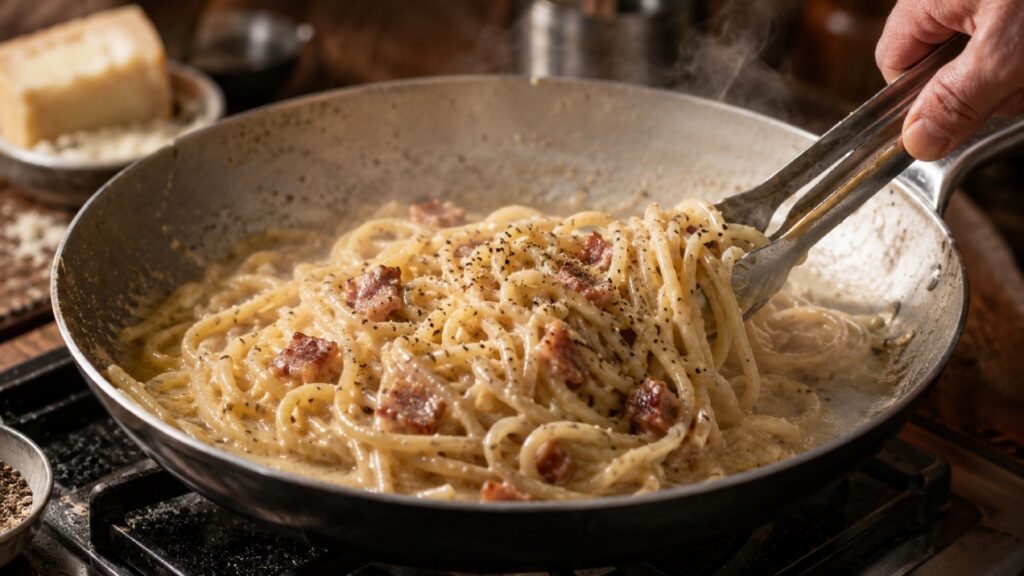
It is also the dish that teaches you mantecatura. There is no sauce, no sugo, no egg cream to act as a binder. There is only guanciale fat emulsified with pasta starch and cheese. Learn gricia, and you understand carbonara.
Temperature is everything
The pecorino must go in off the heat, in two additions. If the pan is still over the flame, the cheese coagulates instead of melting. If it’s too cold, it won’t bind. The right window is when the pasta is still very hot but not boiling — around 70–75°C. You’ll feel it: the cream comes together suddenly and glosses up.
“Gricia is honest. You cannot cheat. There are no ingredients to hide a technique error behind.”— LUCIANO PIGNATARO, FOOD CRITIC, NAPLES
The pasta choice
Rigatoni is traditional and gives the guanciale fat somewhere to pool inside the tube. Spaghetti works if you want elegance. The one rule: the pasta must be bronze-die extruded — the rough surface is not decorative, it creates the surface for emulsification that a smooth Teflon-die pasta simply doesn’t have.
Gricia is the trunk of the Roman pasta tree. Add tomato and you get amatriciana; add eggs and you get carbonara. Learn this one properly and the other two are variations, not new recipes.
SUBSTITUTIONS — IF YOU MUST
- GUANCIALE
- With only four ingredients, this is the one to source properly — cured pork jowl from an Italian deli or online. Unsmoked pancetta is the only acceptable stand-in.
- PECORINO ROMANO
- Parmigiano makes it gentler and less Roman. Go 50/50 if full pecorino reads too salty for you.
- RIGATONI
- Any shape with grip: mezze maniche, tonnarelli, thick spaghetti.
STORAGE & REHEATING
- FRIDGE
- One day, airtight. Like all emulsion pastas, it's at its best the moment it leaves the pan.
- REHEAT
- Low heat, splash of hot water, constant tossing — you're rebuilding the emulsion, not just warming pasta.
REAL QUESTIONS
Asked, answered.
What is gricia, exactly?
Carbonara without eggs, amatriciana without tomato: guanciale, pecorino, pepper, starch. It's the oldest of the Roman pastas — the matrix the others grew from.
My sauce is greasy, not creamy. What went wrong?
Not enough pasta water, or water that wasn't starchy enough. The emulsion needs starch to bind fat — keep adding water and tossing; it will come together.
Can I add onion or garlic?
No. Four ingredients is the recipe. If you want tomato, make amatriciana; if you want eggs, make carbonara.
Which pasta water do I save?
The last, cloudiest cup, right before draining. That cloud is starch, and starch is the sauce.