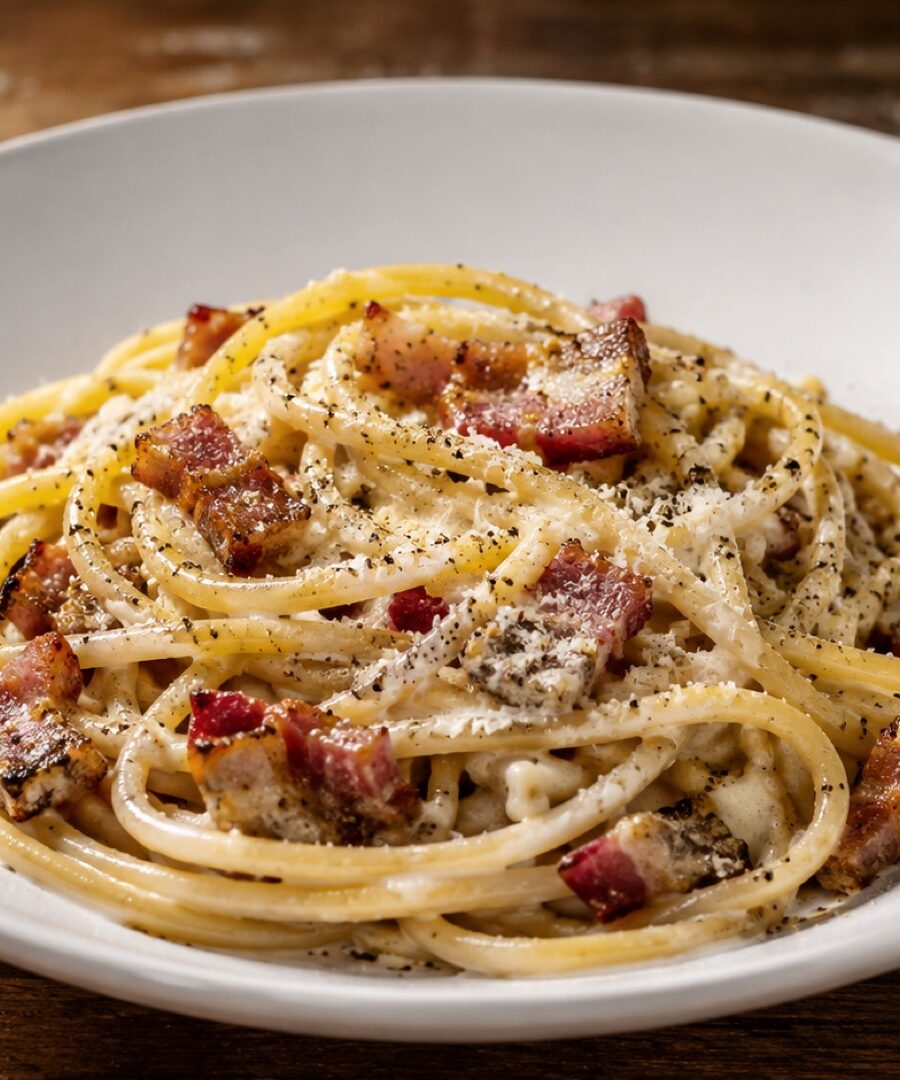
Low heat, dry pan, 8 minutes. Golden and slightly crisp at the edges. Reserve the fat.
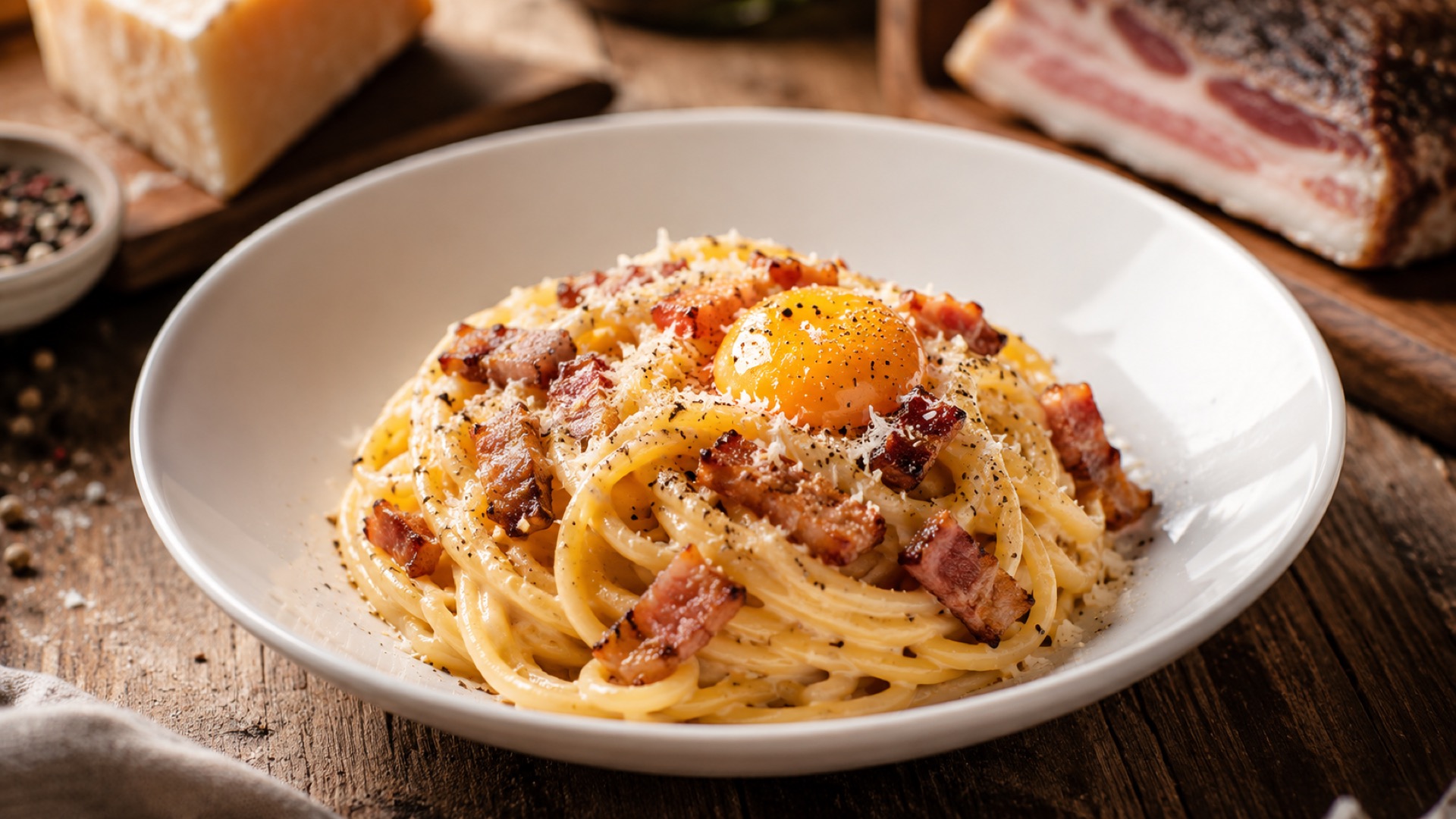
PASTA · ROME
Carbonara: stop adding cream. Seriously, stop.
Four ingredients. Guanciale, eggs, pecorino, pepper. Cream is a surrender, not a substitution.
METHOD
5 steps, and one will define the dish.
Whisk yolks, whole egg, pecorino, and a lot of pepper into a thick, flowing cream.
One minute under al dente in well-salted water. Save a full cup of pasta water.
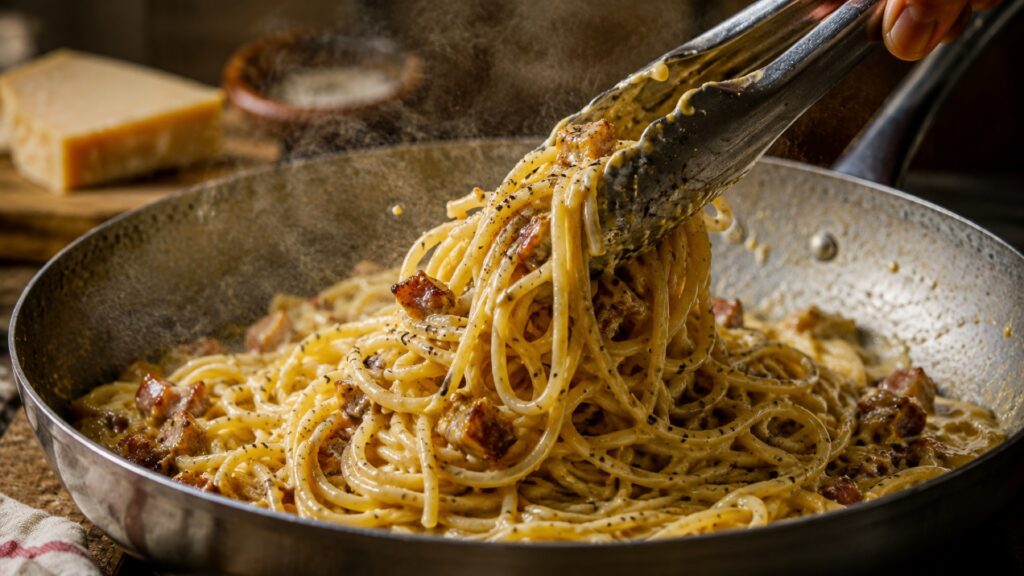
Pasta into the guanciale pan, no flame. Pour in the egg cream. Add pasta water by the spoonful. Toss continuously.
More pecorino, more pepper. Serve before the cream sets.
WHY IT WORKS — THE SCIENCE
The yolk is your sauce.
Carbonara is a postwar dish. It probably emerged from the encounter between Roman cooking and Allied rations — eggs and bacon (or guanciale) that American soldiers brought with them. Rome took those ingredients and made something unrecognizable to anyone who had helped bring them.
This story isn’t fully verified — the origins of carbonara are as contested as those of amatriciana — but it’s what makes the dish interesting: it’s Roman, it’s relatively modern, and it became the global symbol of a cuisine that has, in fact, very little cream in it.
Yolks, not whole eggs
Modern recipes use mostly yolks for two reasons: the yolk has more fat (about 33%) and emulsifies better; and the yolk has a higher coagulation temperature than egg white, giving you more margin before the eggs scramble. A standard recipe uses 4 yolks and 1 whole egg for 4 people.
“The perfect carbonara should feel uncomfortable. It should feel like it might go wrong. If you’re too confident, you probably added something that doesn’t belong.”— LUCIANO MONOSILIO, PIPERO RESTAURANT, ROME
Guanciale, not pancetta
Guanciale is cured pig’s cheek, seasoned with black pepper and spices. Its fat is different from pancetta — softer, more flavourful, with a lower melting point. It is not the same thing. If you can’t find guanciale, use flat unsmoked pancetta — better than cubed, better than smoked, and much better than bacon.
The off-heat technique
The key is the sequence. The pasta goes into a cold pan — not over the flame — with the guanciale fat. It cools slightly before the eggs arrive. The yolk and pecorino cream is added off the heat, with continuous agitation. Pasta water stabilises the emulsion. It takes less nerve than you think. It takes two minutes of focused attention and the ability to keep your hands moving.
If the egg step intimidates you, train on gricia first — it’s carbonara without the eggs, and the rest of the choreography is identical. And if you’ve mastered both, cacio e pepe is the final exam.
SUBSTITUTIONS — IF YOU MUST
- GUANCIALE
- Cured pork jowl — richer and sweeter than any bacon. Italian delis and online shops carry it, and it ships well. Closest stand-in: unsmoked pancetta. American bacon is smoked and takes over the dish.
- PECORINO ROMANO
- Half pecorino, half Parmigiano is a softer blend you'll find in plenty of Roman homes. All-Parmigiano works; add a pinch of salt.
- EGG YOLKS
- There is no substitute. The yolks are the sauce. Anything else is a different recipe wearing carbonara's name.
STORAGE & REHEATING
- FRIDGE
- One day, airtight, with managed expectations — the sauce sets as it cools.
- REHEAT
- Lowest possible heat with a spoonful of water, stirring the whole time. Treat it like custard, because it is one. The microwave will scramble it in seconds.
REAL QUESTIONS
Asked, answered.
Are the eggs safe to eat?
The residual heat of the pasta brings the sauce to around 65°C / 150°F — hot enough to thicken, not enough to scramble. If that worries you, use pasteurized eggs; the method doesn't change.
Where do I find guanciale in the US?
Italian delis, Eataly, good butcher shops, and online. It keeps for weeks in the fridge — buy more than you need.
Can I use bacon?
Bacon is smoked; carbonara is not a smoky dish. In an emergency use unsmoked pancetta. If bacon is truly all you have, blanch it for 60 seconds to tame the smoke.
Why did my eggs scramble?
The pan was on the flame when the eggs went in. The pan comes off the heat, then the egg cream goes in, then you toss. The order is the recipe.
A splash of milk or cream to make it creamier?
No. Creaminess comes from yolks, starch and cheese in the right proportions. Cream is how restaurants hide stale technique.