Crack the peppercorns coarsely — mortar, not grinder. Toast in a dry pan over medium heat until fragrant, about 60 seconds. Off heat.
PASTA · LAZIO
Cacio e pepe, three ingredients, one hundred ways to ruin it.
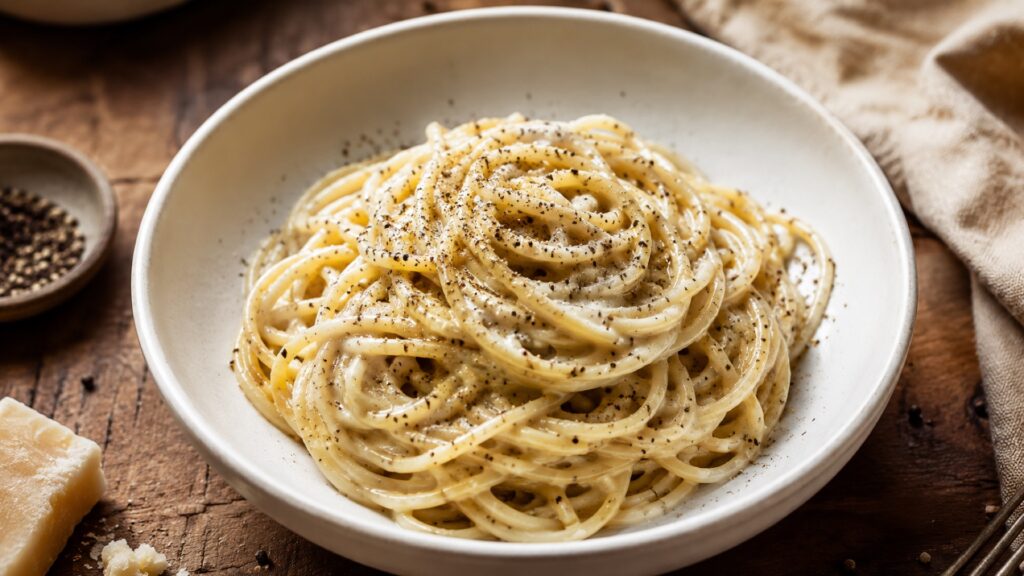
Pasta water, pecorino, black pepper. The dish is hard not because it has many steps — it has almost none — but because emulsion is unforgiving.
METHOD
6 steps, and one will define the dish.
3 litres, a rolling boil, salt heavily. Add the pasta. Cook one minute under al dente — you'll finish it in the pan.
Grate the pecorino on the finest holes. Combine with 4–5 tbsp of starchy pasta water and a pinch of pepper until thick and pourable. This is the dish.
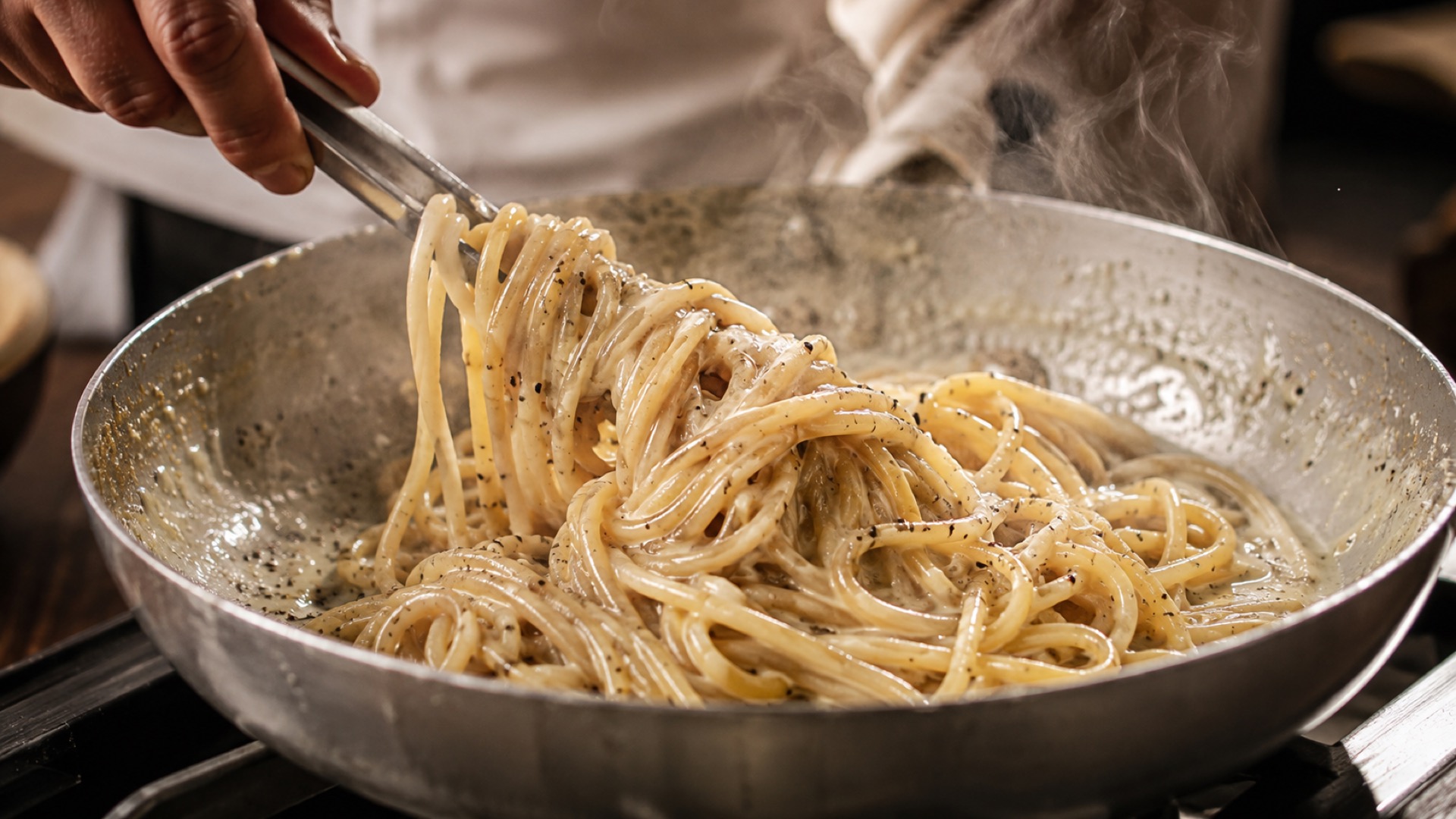
Tongs, straight from pot to pan, with water clinging to it. Toss with the toasted pepper over low heat for 30 seconds.
Pour in the cheese paste. Toss vigorously — wrist action — adding splashes of pasta water until glossy. If it clumps, the pan was too hot.
Serve immediately. Cacio e pepe waits for no one.
WHY IT WORKS — THE SCIENCE
It's an emulsion, not a sauce.
In Rome, the barista at the counter makes cacio e pepe the way he makes espresso — with gestures that look automatic but conceal decades of calibration. There is no precise temperature. There is no timer. There is only the feel.
Cacio e pepe is hard because it asks you to master an emulsion without artificial emulsifiers. Pecorino is fat and protein; pasta water is starchy and salty; heat is the variable that binds them — or breaks them into an unrecoverable clump.
The clumping problem
If your cacio e pepe clumps, you made one of these mistakes: the pecorino wasn’t fine enough, the pasta water wasn’t starchy enough, or the pan was too hot when you added the cheese. All three are easily fixed.
“The cheese must not cook. It must melt. There is a twenty-degree difference between those two things.”— FLAVIO DE MAIO, TRATTORIA DA CESARE AL CASALETTO, ROME
Why tonnarelli and not spaghetti
Tonnarelli is a square-section pasta, traditional to Lazio, that holds the cream better than round spaghetti. More surface area means more surface contact, more starch dissolving into the cream, more grip. If you can’t find tonnarelli, square spaghetti or rigatoni work. Round spaghetti is last resort.
The starch question
The pasta water must be genuinely starchy — which means cooking a relatively large amount of pasta in a relatively small amount of water. The standard restaurant trick is to cook 400g of pasta in 2 litres instead of 4. More pasta, less water, more starch concentration. At home, use a smaller pot than you think you need.
Once the emulsion makes sense to your hands, the rest of the Roman family opens up: gricia is the same technique with guanciale fat instead of pepper, and carbonara adds eggs to the equation.
SUBSTITUTIONS — IF YOU MUST
- PECORINO ROMANO
- A sharp, salty sheep's cheese — look for the DOP stamp at Italian delis, Whole Foods, or online. Parmigiano works mechanically but makes a sweeter, politer dish.
- TONNARELLI
- Square-section fresh pasta from Lazio. Outside Italy: bronze-die spaghetti or rigatoni — the rough surface is what holds the cream.
- BLACK PEPPERCORNS
- Pre-ground pepper lost its oils months ago. If it's truly all you have, halve the amount and accept the loss.
STORAGE & REHEATING
- FRIDGE
- Honestly: don't. The emulsion breaks as it cools and never fully comes back. This dish is a ten-minute commitment — eat it.
- REHEAT
- If you must: a pan over the lowest heat with a splash of hot water, tossing constantly. The microwave turns pecorino into rubber bands.
REAL QUESTIONS
Asked, answered.
Why did my cheese clump into a ball?
Heat. The pecorino touched something hotter than 70°C / 160°F and the proteins seized. Make the paste with warm — not boiling — pasta water, and combine everything off the heat.
Can I use Parmesan instead of Pecorino Romano?
You can, and it will taste good. It will also be a different dish — sweeter, nuttier, less Roman. Add a pinch more salt to compensate.
Do I really need the pasta water?
Yes. The starch is the emulsifier — it is what turns cheese and water into cream. This is why you cook the pasta in less water than usual.
Is cacio e pepe spicy?
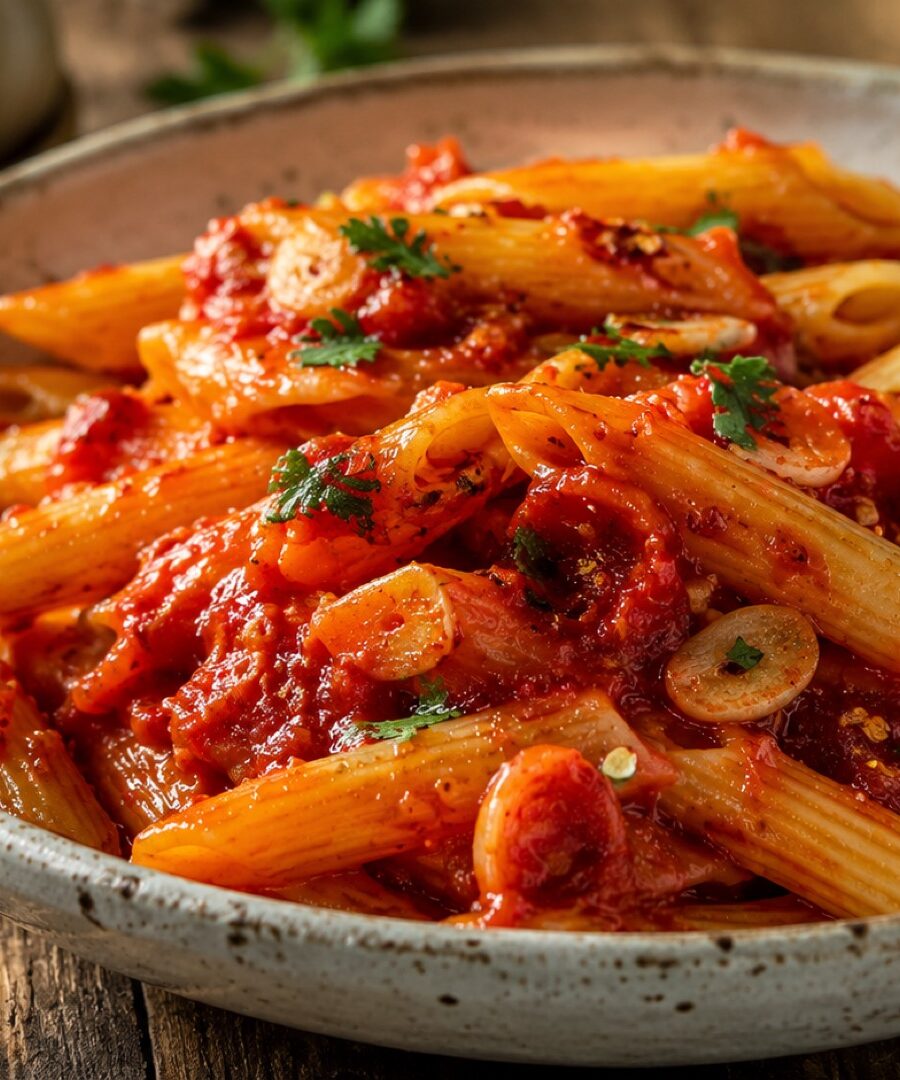
No. The pepper is toasted for aroma, not fire. If you want heat, make penne all'arrabbiata instead.
Can I double the recipe for guests?
It scales badly past six servings — the emulsion window is short and a crowded pan cools unevenly. Use two pans, or pick a more forgiving Roman classic like amatriciana.