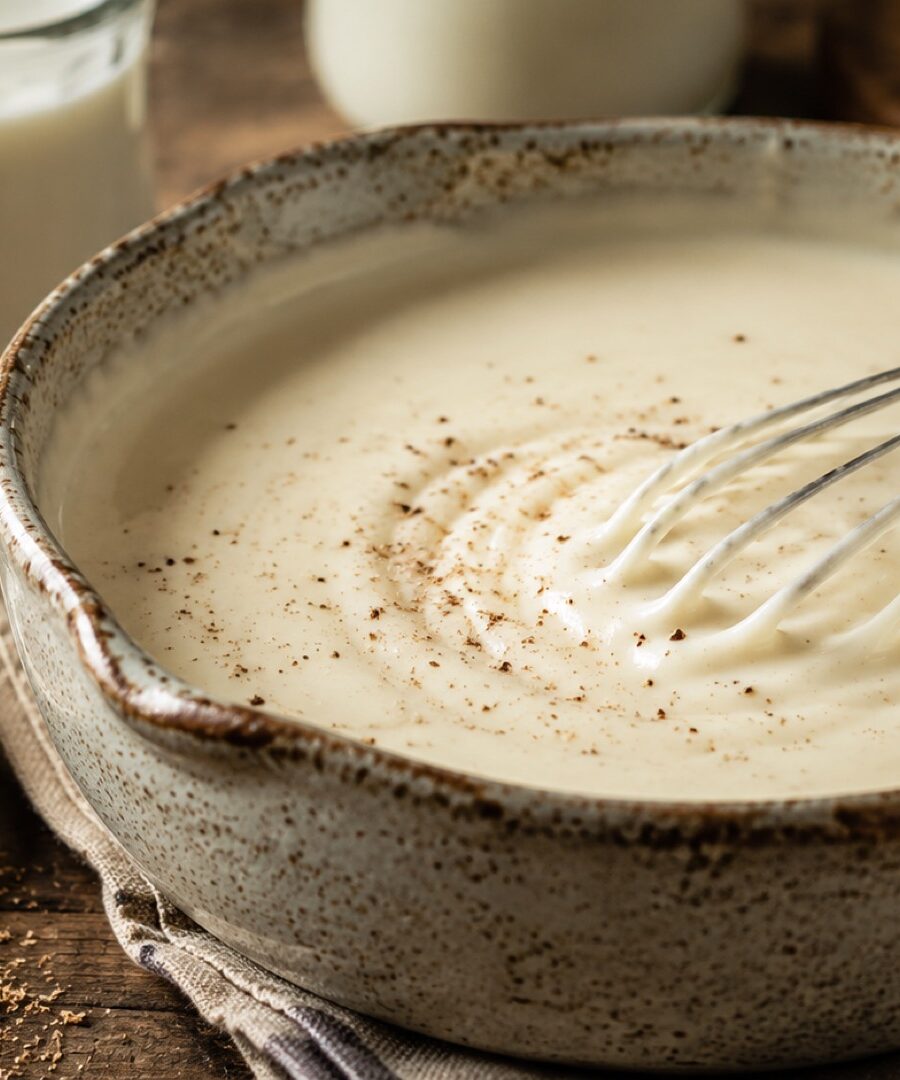
Directly into the pan. No blender, no food mill — you want texture.
PASTA · ALL ITALY
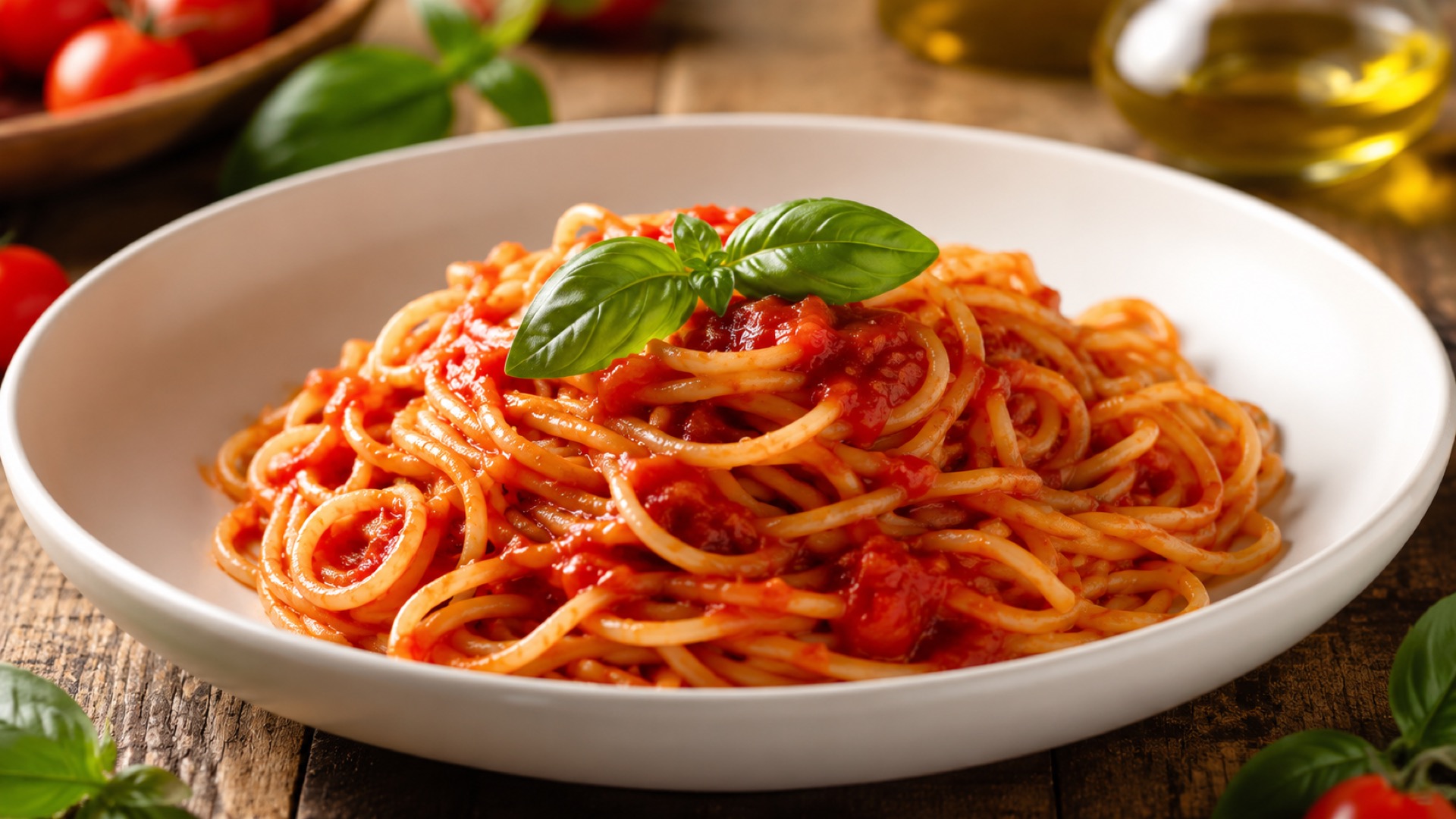
Spaghetti al pomodoro: the hardest dish you think you know.
Five ingredients, nowhere to hide. The perfect tomato sauce needs one type of tomato, very little oil, and should not simmer for hours.
METHOD
6 steps, and one will define the dish.
Unpeeled clove in oil, medium heat, 60 seconds. Remove before it colours.
High heat for 5 minutes. Then low, 15 minutes. Season with salt.
Reserve a cup of pasta water.
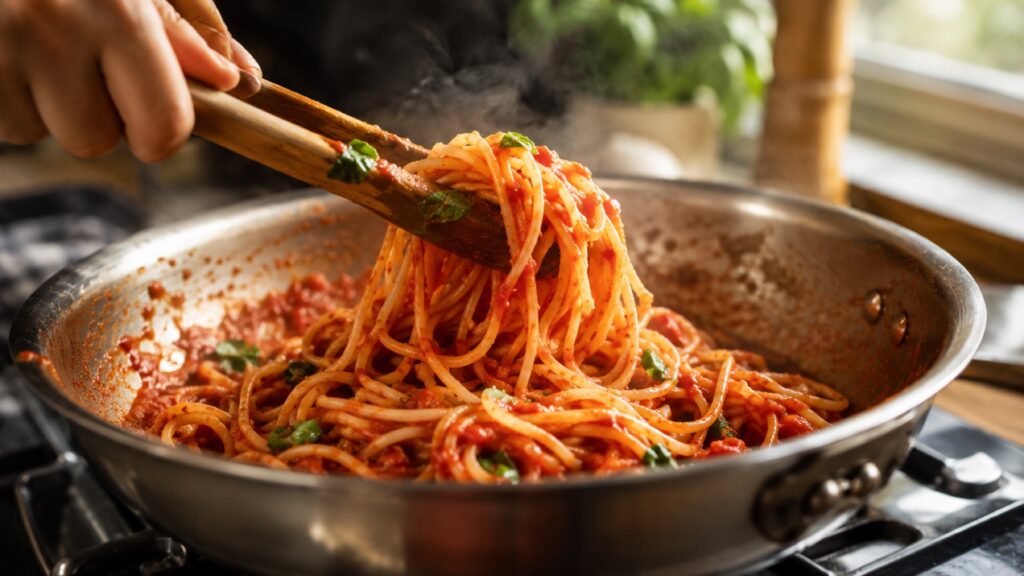
Pasta into the sauce over medium heat, a ladle of pasta water, 90 seconds of vigorous tossing.
Basil torn by hand, a drizzle of extra virgin. Serve.
WHY IT WORKS — THE SCIENCE
Simplicity does not forgive.
Spaghetti al pomodoro is the credibility test of any cook. There are no complex ingredients to hide behind. There is no technique that masks imperfection. There are five ingredients and the entire story of how you used them is visible in the bowl.
The paradox is that most people prepare pasta al pomodoro as if it were simple, when it is in fact one of the most technically demanding dishes in the repertoire. Cooking the pasta to the right point, building a sauce that is neither watery nor overcooked, executing a mantecatura that actually grips — each of these steps requires attention.
Which tomato
San Marzano DOP is the benchmark. The variety matters — San Marzano has more flesh, fewer seeds, less residual acidity than generic tinned tomatoes. If you can’t find it, use a quality whole tinned tomato and crush by hand — not blended, not passata. You want texture and the irregular pieces that create a sauce with body.
How long the sauce cooks
Fifteen to twenty minutes over medium-low heat. No more. The most common error is overcooking, which kills the freshness of the tomato and produces that flat sweetness that abroad is often corrected with sugar. Do not add sugar — change the tomatoes.
“Perfect spaghetti al pomodoro has a specific smell when the pasta goes in for the final toss. It smells of sea and earth at the same time. When you get that, you’ve done it right.”— MASSIMO BOTTURA, OSTERIA FRANCESCANA, MODENA
The mantecatura
The final two minutes in the pan are not optional. This is when the pasta releases starch into the sauce, the sauce thickens around the pasta, and the two become one thing. Serve a pasta that was simply drained and sauced separately, and however good the sauce is, it will slide off. Mantecatura is how you make it stay.
From here the tomato branch splits in two directions: add chilli at the start and you get arrabbiata; in late summer, swap the can for the real thing with fresh tomato sauce — a recipe with a hard deadline.
SUBSTITUTIONS — IF YOU MUST
- SAN MARZANO DOP
- The 28-oz can of whole peeled tomatoes is the exact American counterpart. Buy whole, never diced — diced tomatoes are treated with calcium chloride and refuse to break down.
- FRESH BASIL
- No dried basil, ever. If you can't get fresh, leave it out — the sauce survives that; it doesn't survive dust.
- SPAGHETTI
- Any long shape. The sauce is the point here, not the geometry.
STORAGE & REHEATING
- FRIDGE
- The sauce keeps 4 days and is better on day two. Store it unsauced — pasta and sauce live apart until the pan.
- FREEZER
- Three months, in portions. This is the sauce worth making in quadruple batches in late summer.
- REHEAT
- Gently, in a pan. Add the raw oil and basil only after reheating, or you lose both.
REAL QUESTIONS
Asked, answered.
Should I add sugar to cut the acidity?
No — change the tomatoes. Sugar masks a bad can; it doesn't fix it. Good San Marzano shouldn't need correction.
Why only 20 minutes of simmering?
Because this is a fresh sauce, not a ragù. Past 25 minutes you're trading brightness for jam.
Fresh tomatoes or canned?
From August to September, fresh — that's a different recipe with a hard deadline. The other ten months, a good can beats a sad fresh tomato every time.
Whole, crushed, or passata?
Whole, crushed by your own hand. Passata is smoother and duller; pre-crushed is whole tomatoes' broken cousin. Texture is flavour.
Is the garlic clove cheating?
Some of Italy says yes, some says obviously not. One unpeeled clove, removed before it colours, offends no one.