Cut into batons, render slowly in a dry pan until the edges are crisp. Set aside.
PASTA · LAZIO
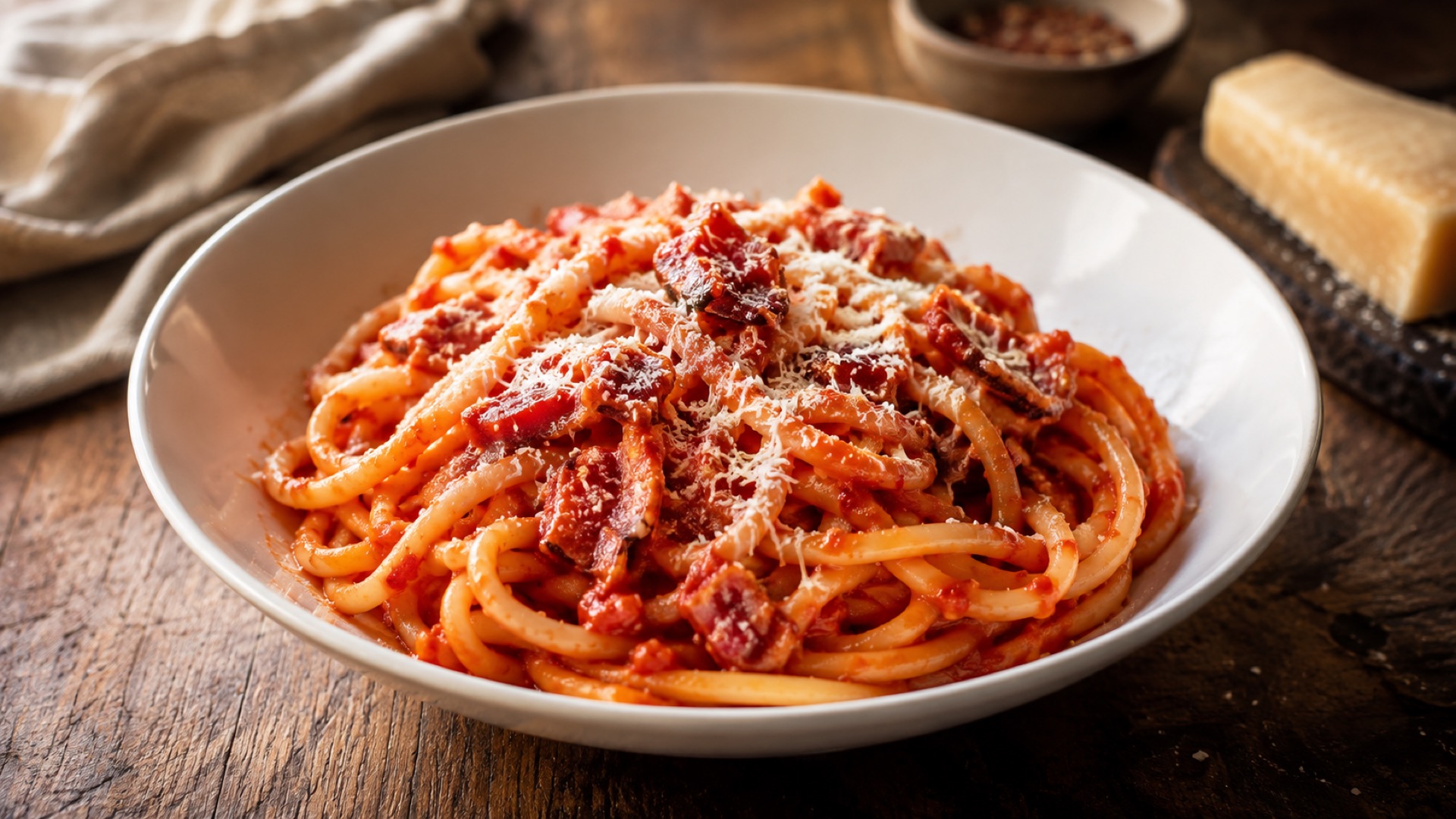
Amatriciana, and the village that swears it’s theirs.
A 35-minute sauce that has started actual political incidents in Italian parliament. Guanciale, tomato, pecorino. Onion is optional; garlic is heresy.
METHOD
6 steps, and one will define the dish.
Pour off all but a couple tablespoons of fat. Add wine, scrape the pan, reduce by half.
Crush the San Marzano by hand. Simmer 20 minutes — no garlic, no onion, this is Amatrice not Rome.
Bucatini in salted water. Pull at one minute under al dente.
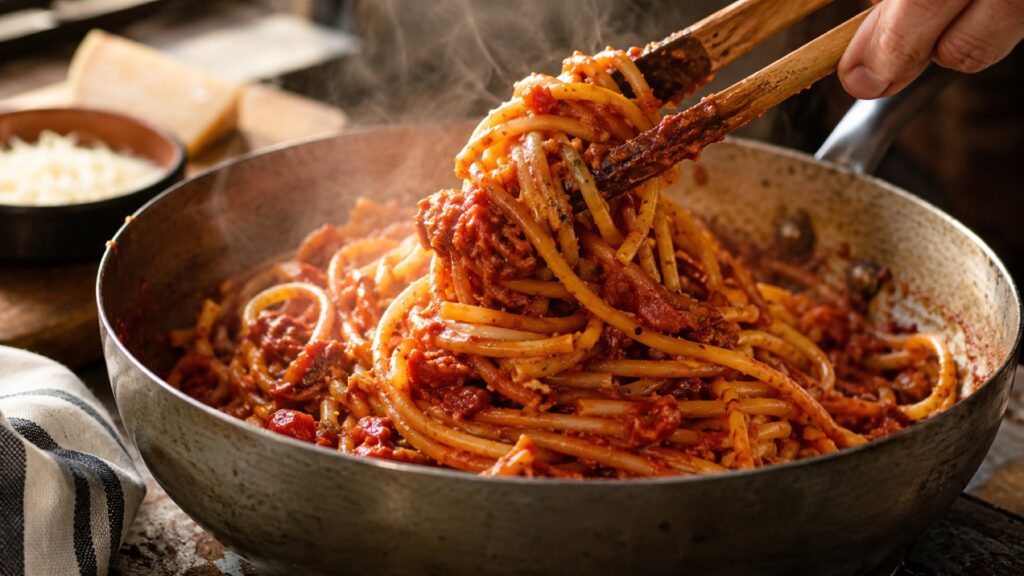
Pasta and a ladle of pasta water. Toss hard. Off the heat, fold in the pecorino.
And the reserved crisp guanciale on top.
WHY IT WORKS — THE SCIENCE
The guanciale fat is the entire foundation.
Amatrice is a village in the province of Rieti, in the deep Lazio countryside, which before the 2016 earthquake had just over 2,600 inhabitants and one pasta. Today that pasta is a symbol — culinary, political, and in some sense a statement of survival.
The amatriciana sauce has a municipal designation. The Town of Amatrice has filed the official recipe: bucatini, guanciale, San Marzano, pecorino romano, dry white wine, optional chilli. No onion, no garlic, no added oil.
The great onion schism
In Rome, amatriciana is often made with half an onion. In Amatrice, this is considered a Roman variation — not an error, but not the original recipe. The version without onion is drier, sharper, more direct. With onion it becomes sweeter and rounder.
“If you add the onion it’s not wrong — it’s just another recipe. Like saying the Lamborghini with air conditioning isn’t a Miura. Technically right. Practically different.”— GIANCARLO VISSANI, CHEF
Why bucatini
Bucatino is a tube. The sauce gets inside. When you bite, hot tomato shoots out. This is a feature, not a bug. The pasta must be robust enough to survive vigorous tossing without snapping — spaghetti can substitute in emergencies, but it misses that moment of surprise.
The wine step
The white wine is non-negotiable in the Amatrice recipe. It deglaze the pan after the guanciale renders, lifts the fond, and adds an acidity that balances the fat. Use a dry, neutral white — no oak, no residual sugar. It cooks off in 90 seconds but leaves a structural note.
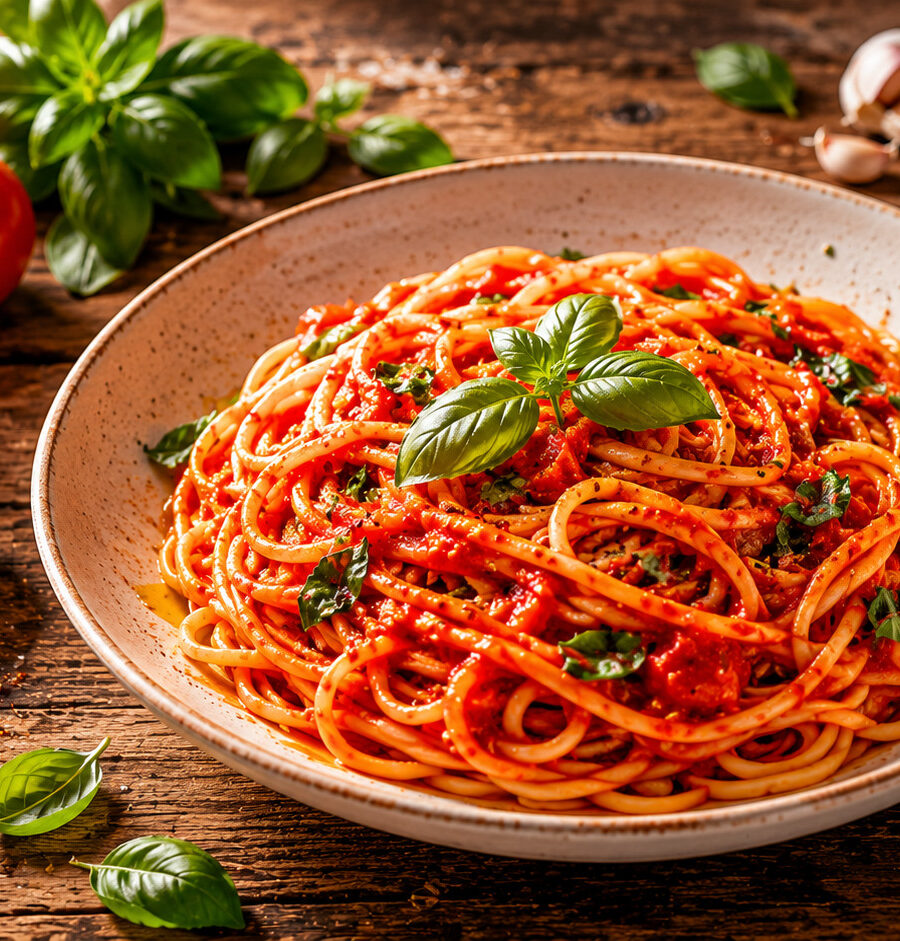
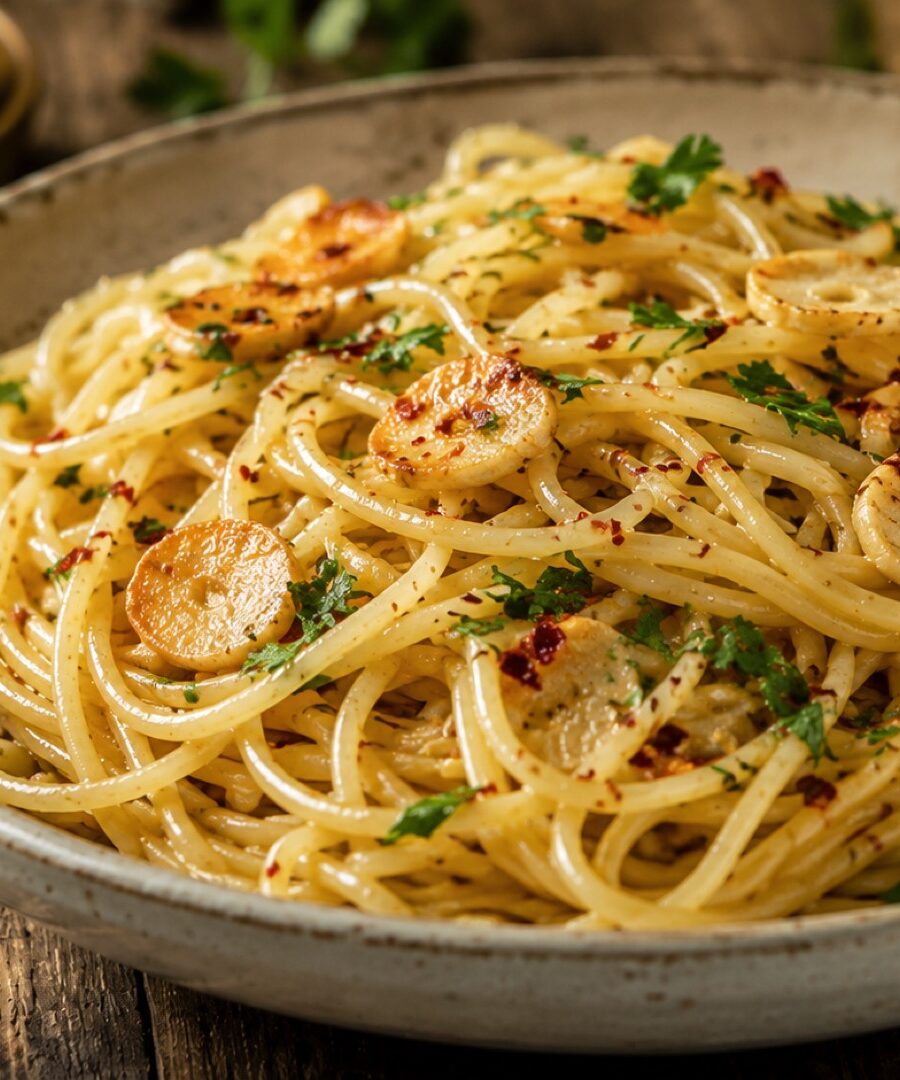
Strip the tomato out of this recipe and you have gricia — which is not a coincidence, it’s the family tree. And if you want to understand what the tomato itself should taste like before it meets guanciale, start with spaghetti al pomodoro.
SUBSTITUTIONS — IF YOU MUST
- GUANCIALE
- Cured pork jowl, the backbone of all three Roman pastas. Unsmoked pancetta is the accepted fallback — bacon brings smoke that doesn't belong here.
- SAN MARZANO DOP
- Any honest whole peeled tomatoes work; taste for acidity first. Skip anything labelled 'Italian-style' that already has basil and garlic in the can.
- BUCATINI
- Thick spaghetti or rigatoni. Bucatini's hole is tradition, not physics.
STORAGE & REHEATING
- FRIDGE
- The sauce alone keeps 3 days and arguably improves overnight. Sauced pasta: one day, and the pasta keeps drinking the sauce.
- FREEZER
- The sauce freezes beautifully for 2 months. Make double.
- REHEAT
- Sauce: gently in a pan. Sauced pasta: pan, low heat, splash of water. Never boil it — the pecorino goes grainy.
REAL QUESTIONS
Asked, answered.
Onion or no onion?
Amatrice says no. Rome often says yes. This recipe is the Amatrice original — guanciale, tomato, pecorino, wine, full stop.
Why no garlic?
Because it was never there. The guanciale provides all the aromatics this sauce needs. Garlic is for arrabbiata.
Can I make the sauce ahead?
Yes — it's the rare Roman sauce that doesn't mind waiting. Up to 3 days in the fridge; add the pecorino only when you toss the pasta.
Is amatriciana spicy?
Traditionally there's a small piece of chilli in the pan — warmth, not fire. Optional, and one chilli means one.
What's the difference from gricia?
Tomato. Gricia is amatriciana before the tomato arrived from the Americas — same guanciale, same pecorino, no red.