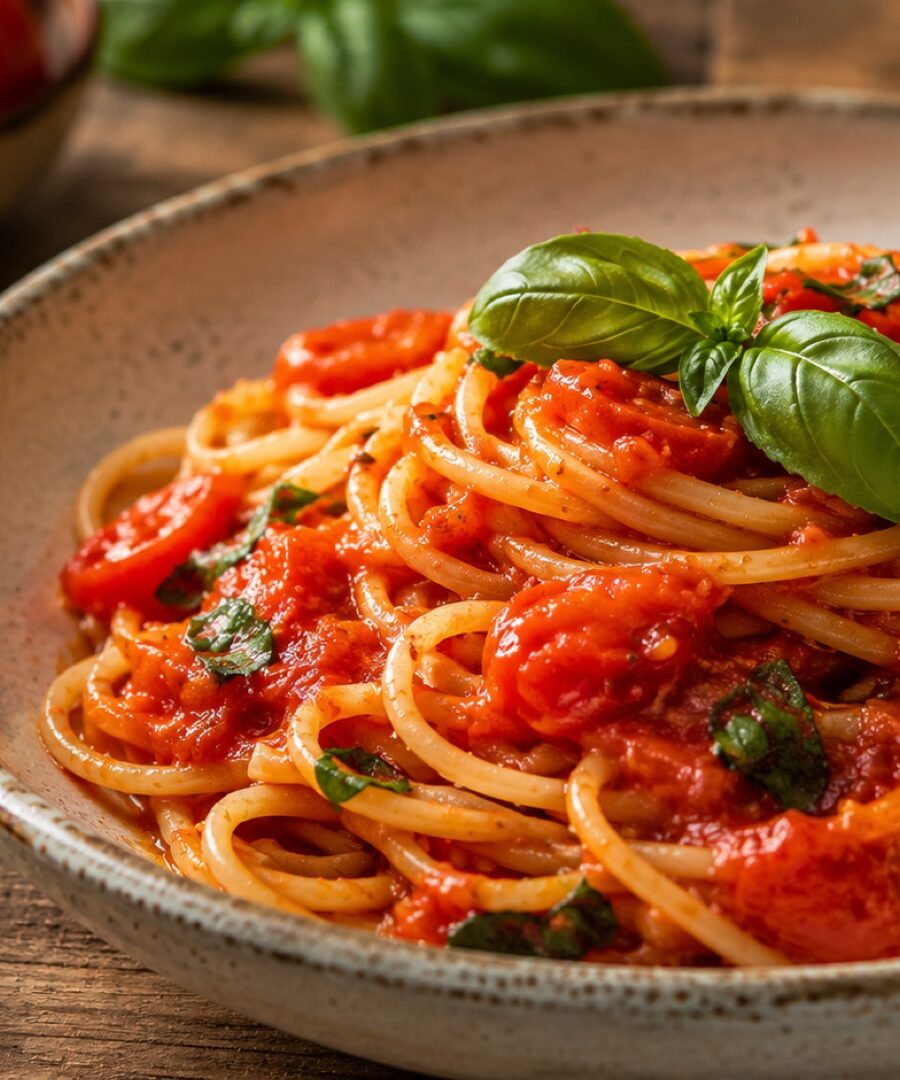
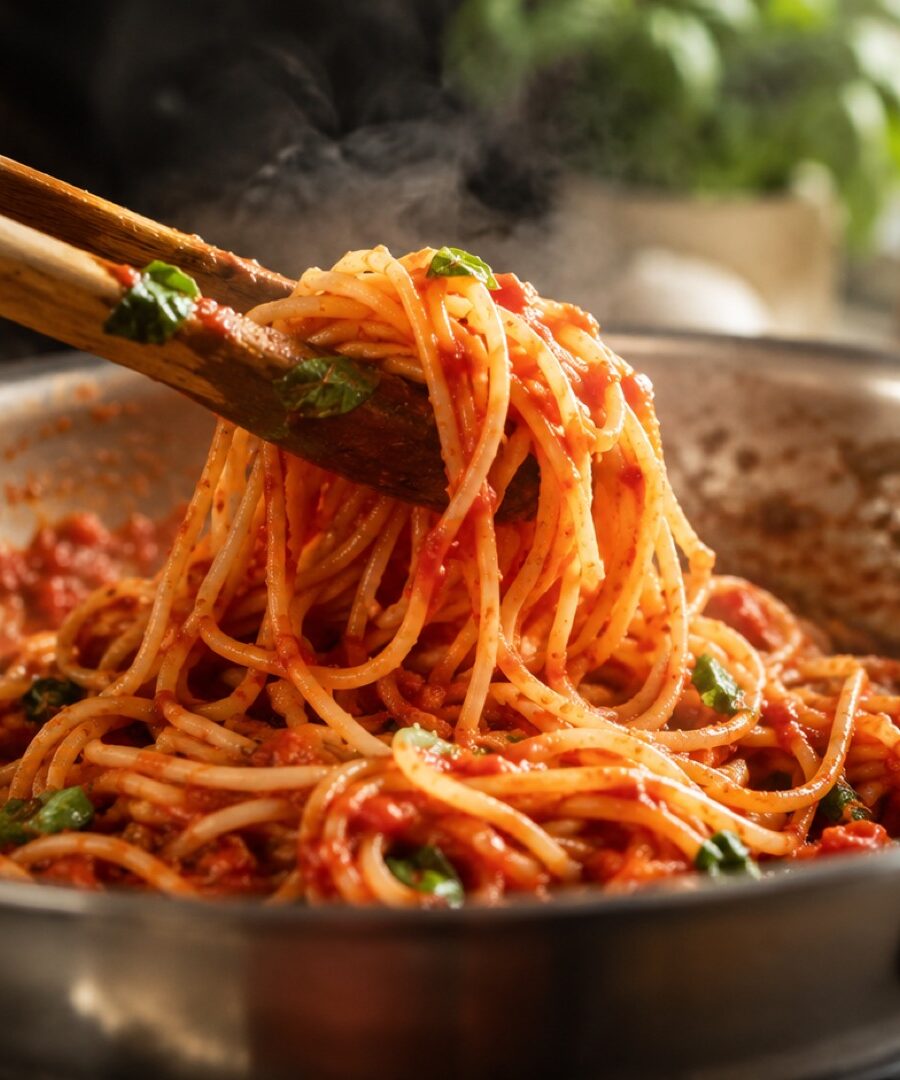
In olive oil over medium heat, 90 seconds — until the garlic is golden at the edges. Do not burn it.
PASTA · ROME
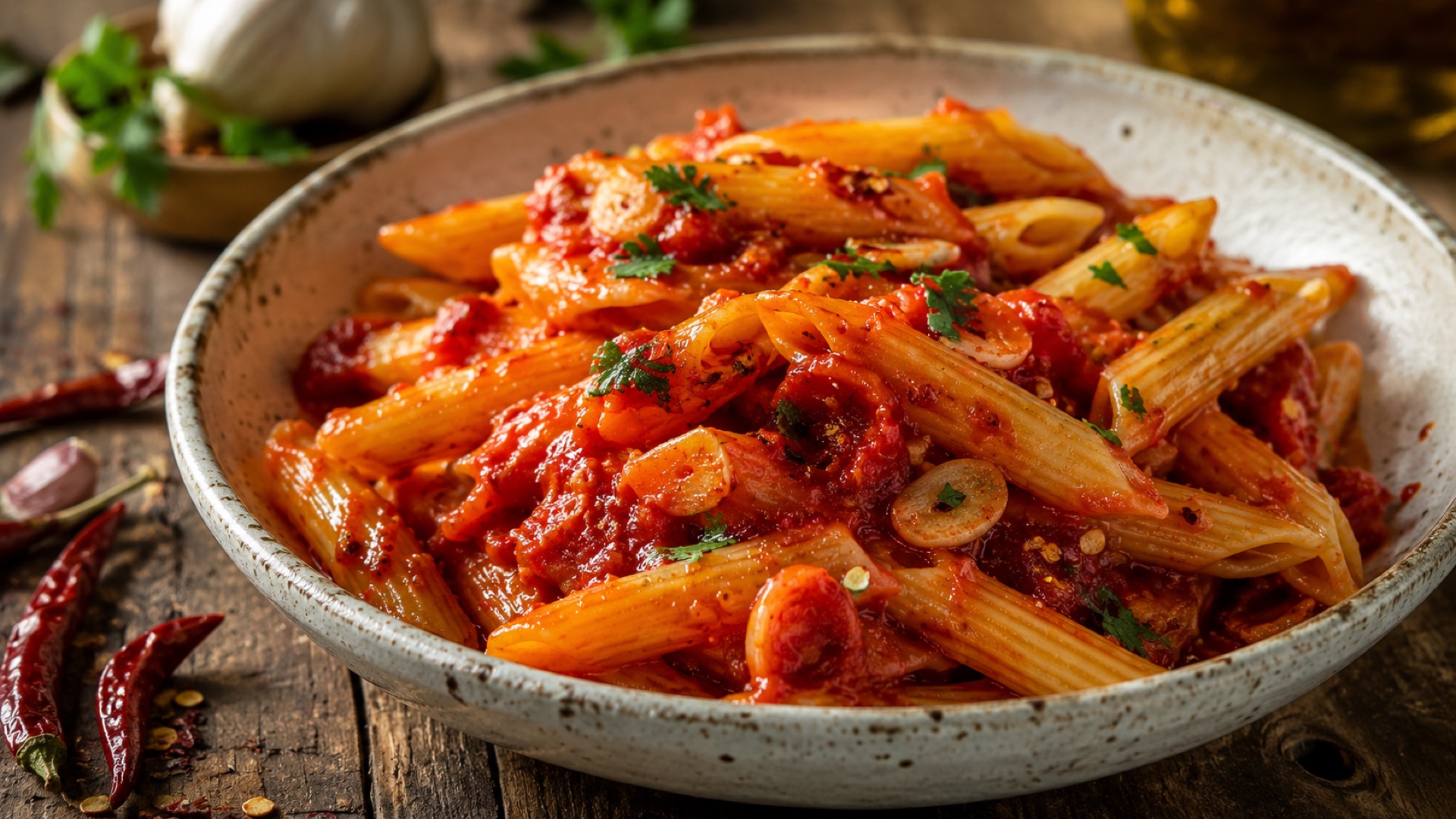
Arrabbiata: angry pasta, made correctly.
Tomato, garlic, chilli, olive oil. No onion, no pancetta, no cream. Arrabbiata is Roman, it is fast, and the heat level is not negotiable.
METHOD
5 steps, and one will define the dish.
Hand-crushed. High heat 3 minutes, then medium for 12. Season.
In heavily salted water. Reserve a cup of pasta water.
Pasta into the sauce, splash of pasta water, toss 2 minutes.
At the end. No cheese on arrabbiata.
WHY IT WORKS — THE SCIENCE
The chilli goes in with the garlic. Not at the end.
Arrabbiata means angry. The dish should taste angry. If you are serving something mild and tomato-forward and vaguely spicy, you have made a pleasant pasta — but you have not made arrabbiata. The chilli is not a suggestion.
The name appears in Roman cookbooks from the early twentieth century, but the sauce is older than its name. It is the simplest possible tomato pasta — garlic, chilli, olive oil, tomato — reduced to four ingredients because four is all it needs. Every addition makes it a different dish.
No pancetta. No onion. No cream.
The most common error in recipes published outside Italy is the addition of pancetta. This transforms arrabbiata into a simplified amatriciana — a different sauce with a different history and a different city. Arrabbiata is Roman and vegetarian. If you add pork, you have made something else.
“Arrabbiata is about simplicity and heat. Not complexity. The moment you start adding things, you are no longer making arrabbiata — you are making a generic tomato sauce with extra steps.”— CRISTINA BOWERMAN, GLASS HOSTARIA, ROME
The chilli goes in first
The chilli goes in with the garlic, at the beginning, in the oil. This is not negotiable. Adding chilli at the end of cooking gives you a sauce with heat sitting on top of it — sharp and unintegrated. Adding it at the start allows the capsaicin to infuse the oil, which then coats every element of the sauce. The heat is present in the sauce, not applied to it.
Arrabbiata is pomodoro with a temper, and the chilli-in-oil technique is the same one that powers aglio, olio e peperoncino — the midnight version with no tomato at all.
SUBSTITUTIONS — IF YOU MUST
- DRIED CHILLI
- Whole dried peperoncino is the original. Red pepper flakes work: a generous half-teaspoon per chilli, added with the garlic so the oil carries the heat.
- SAN MARZANO
- Any good whole peeled tomatoes. The dish is heat and garlic riding a clean tomato base — it forgives a lesser can better than the pomodoro does.
- PENNE RIGATE
- Rigate — ridged — is the point: the ridges hold an angry sauce. Smooth penne lisce is the one shape Italy genuinely distrusts.
STORAGE & REHEATING
- FRIDGE
- Sauce alone: 4 days, and the chilli keeps talking — expect day-three arrabbiata to be angrier than day one.
- FREEZER
- Two months. Label it; it looks identical to your other tomato sauces and makes a surprising lasagna.
- REHEAT
- In a pan. Finish with fresh raw oil and parsley after reheating, not before.
REAL QUESTIONS
Asked, answered.
How hot is arrabbiata supposed to be?
Hot enough to notice, not hot enough to stop a conversation. 'Angry', not 'furious'. Two chillies is bold; past that you're showing off to your own kitchen.
Cheese or no cheese?
Tradition says none — heat and pecorino quarrel. Rome looks the other way if you do it quietly.
Can I use fresh chillies?
Yes — fresh red peperoncino, or a serrano in a pinch. Slice thin, fry with the garlic, expect a brighter, greener heat.
How is this different from tomato sauce with chilli flakes on top?
The chilli is fried in the oil at the start, not sprinkled at the end. Fat-soluble heat through every bite versus dust on the surface — that's the whole dish.