The chitarra: the pasta cutter that is also, technically, a musical instrument.
A wooden frame strung with steel wires. You press a sheet of pasta dough through it and it cuts into perfectly square spaghetti. It is called a guitar because if you pluck the wires, it makes a sound. Nobody has ever plucked the wires. It is from Abruzzo and it is extraordinary.
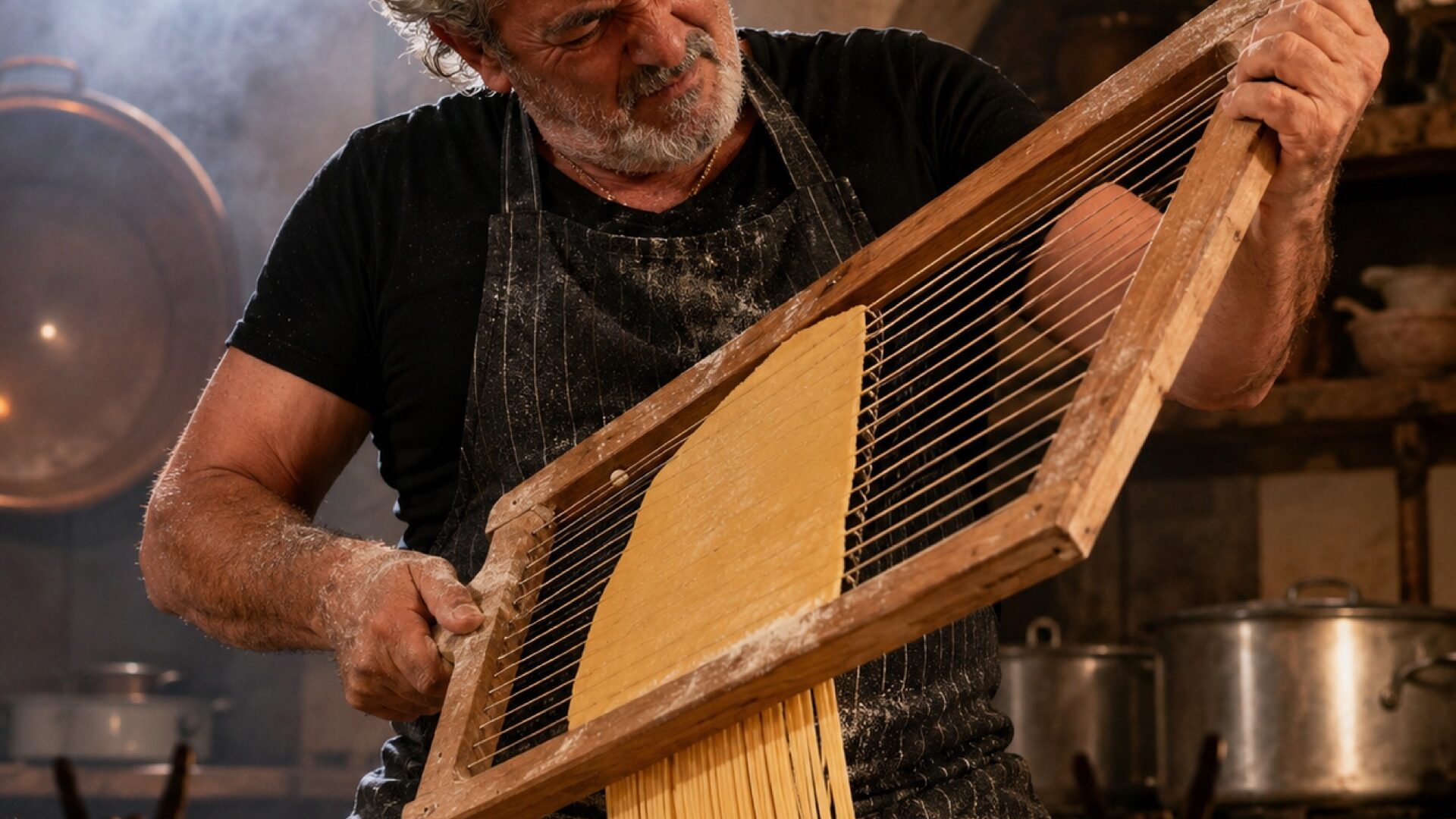
The chitarra is a rectangular wooden frame strung with parallel steel wires spaced 2–3mm apart. You lay a sheet of pasta dough on the wires, press a rolling pin across it, and the dough falls through in perfectly square-section spaghetti. It is called a guitar because the wires, if you were to pluck them, produce a faint musical tone. Nobody has ever plucked the wires for any purpose other than checking they are tight. The name stuck anyway.
It comes from Abruzzo, where the local pasta — spaghetti alla chitarra — is the regional staple. The square cross-section of the pasta produced by the chitarra creates more surface area than round spaghetti, which means more sauce contact per strand. This is not trivial. It is why the pasta paired with ragù abruzzese — a rich lamb sauce — works better on chitarra spaghetti than on round.
Why you should own one
Because it costs very little, lasts indefinitely, takes no electricity, and produces a pasta shape that no commercial manufacturer has ever replicated adequately. The chitarra pasta you find in packets is always slightly wrong — either the section is not perfectly square or the texture is too smooth. Made at home on the instrument it was designed for, spaghetti alla chitarra is one of the more satisfying things in the Italian pasta repertoire.
“The chitarra is not a specialty tool. In Abruzzo it is as basic as a pot. We find it remarkable that the rest of Italy does not use it more. We find it extraordinary that the rest of the world barely knows it exists.”— NIKO ROMITO, REALE, CASTEL DI SANGRO