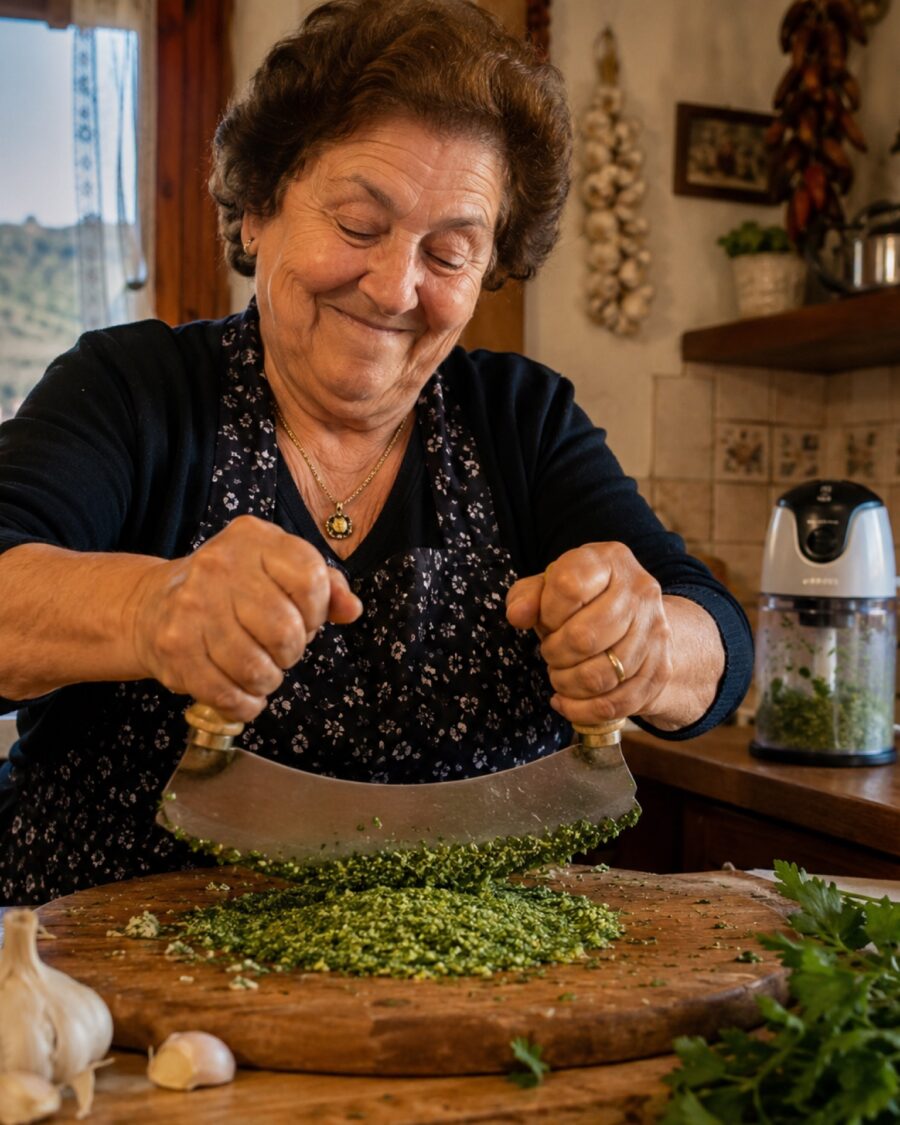
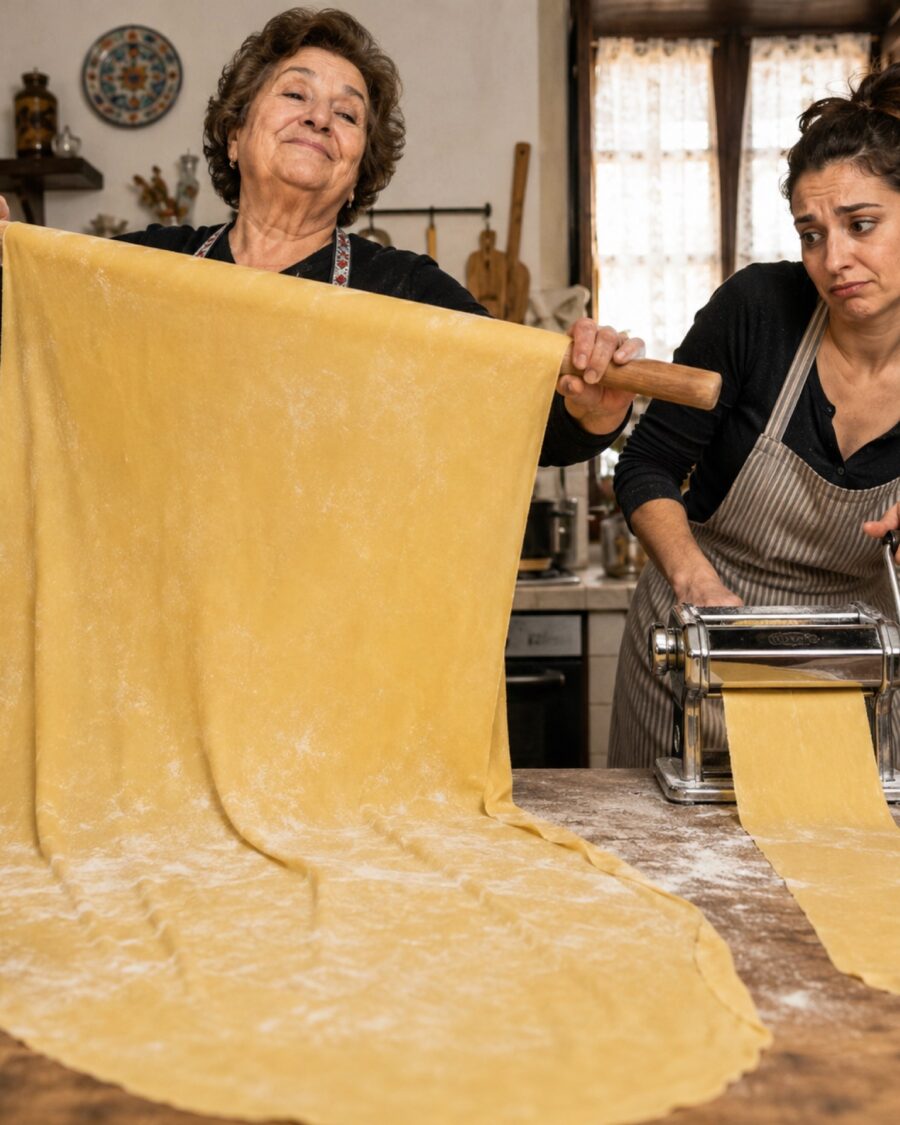
The tomato press: a machine, a ritual, and a family obligation.
Every August, in every self-respecting southern Italian family, an entire weekend is cancelled. Crates of San Marzano arrive. The spremipomodoro comes out. Children are assigned roles they did not ask for. By Sunday evening there are 200 bottles of passata and everyone is exhausted and satisfied.
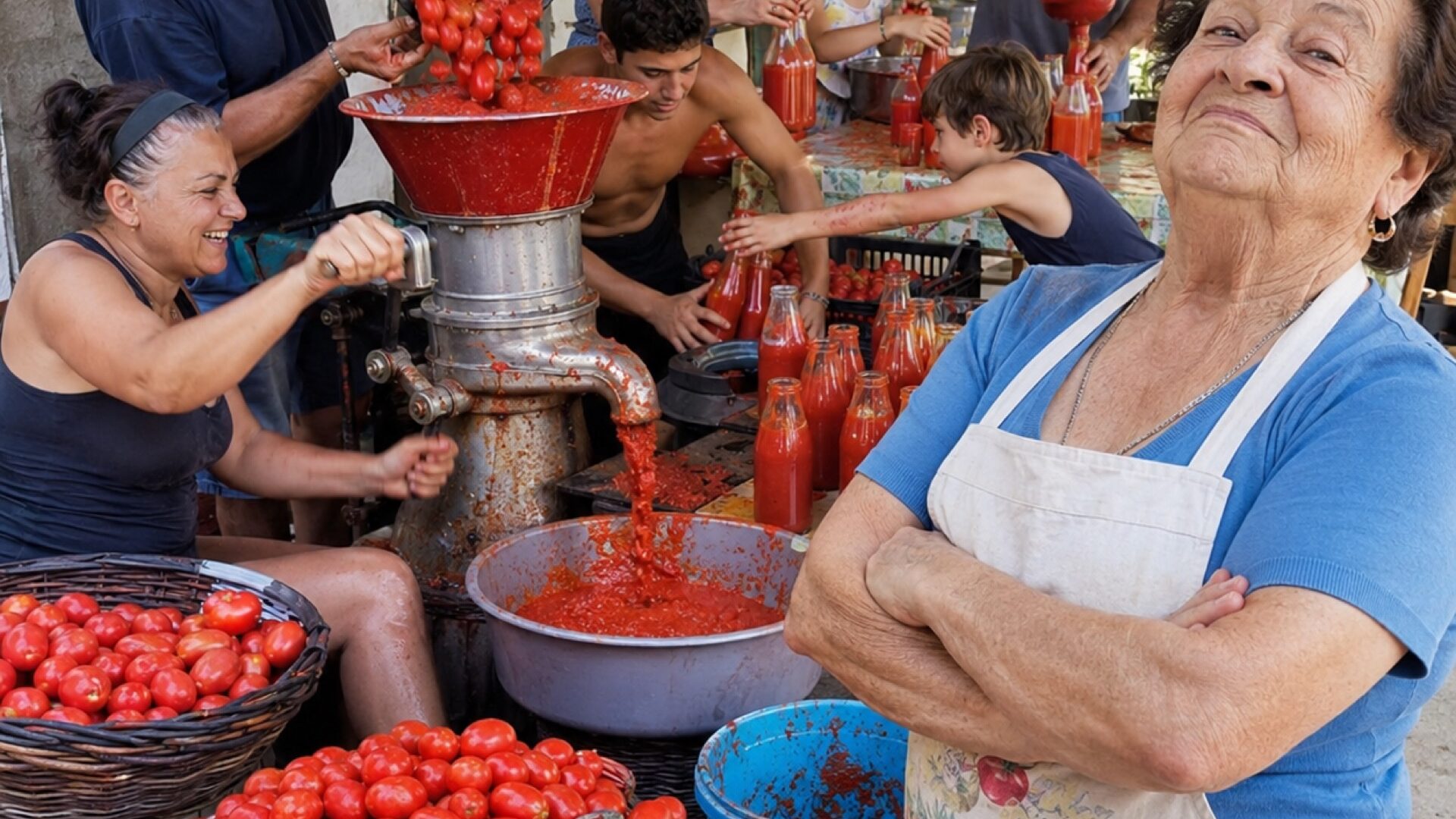
The spremipomodoro is a hand-cranked or electric machine through which whole tomatoes are fed, emerging as smooth passata, with the seeds and skins expelled through a secondary outlet. It is used once a year, for approximately two weekends in August, by every southern Italian family that takes tomatoes seriously. Which is all of them.
The August passata ritual — known in different regions as la salsa, la conserva, or simply il pomodoro — is a collective undertaking. Crates of San Marzano or Roma tomatoes arrive. Every family member who can be contacted is assigned a role. Children stir, teenagers manage the bottles, adults operate the machine, and the grandmother supervises with an expression that communicates both pride and the distinct impression that everyone is doing it wrong.
Why home passata is different
Industrial passata is made from tomatoes picked at a consistent but not peak ripeness, processed for shelf stability, and packed in conditions that favour longevity over flavour. Home passata is made from tomatoes picked at full ripeness in August, processed within 24 hours, and consumed over the following twelve months. The difference in flavour is not subtle. A jar of home passata opened in February tastes of August. Commercial passata tastes of tomato concentrate.
“We make 300 bottles every August. My mother started this in 1962. I continued it. My daughter will continue it. The spremipomodoro will outlast all of us.”— CARMELA RUSSO, NAPLES
The investment
A decent electric spremipomodoro costs between 80 and 150 euros. Given that it produces a year’s supply of passata in a weekend, at a quality no shop-bought version matches, the economics are straightforward. The social dimension — eight people in a garden in August, covered in tomato, arguing about garlic — cannot be priced.